London’s Hidden Treasures: Discover Luxury’s True Face in 10 Boutique Hotels
London has become the language my cities speak. Over the last five years, I’ve returned perhaps more than a hundred times; each time, like a lover, I pass through its doors. Yet what draws me is not Westminster’s majestic palaces or Big Ben’s comforting chime. Instead, I search for those boutique hotels that suddenly appear in the heart of old, narrow streets—concealed in their full glory, waiting to be discovered. Every stone, every window, every piece of furniture speaks in the language of centuries—and I am merely the listener to their silent dialogue. I chase moments as refined as a perfectly pulled cappuccino in Mayfair’s elegant cafes; atmospheres as wise as Bloomsbury’s libraries of midnight reading; the colorful spirit between Notting Hill’s pastel homes. This guide wholly shares those moments I’ve pursued. If your hotel choice isn’t chains but place and soul; if your night isn’t just about the bed but the space that holds you—then this is written for you.
THE STANDARD LONDON
As I entered the pulse of Shoreditch’s beating heart, I stepped through The Standard London’s doors. In that first second, I understood: this hotel is architecture singing. Old London dances with modern design—a rooftop bar overhead, street artists’ moods captured in graffiti on the walls, cream tones and marble whispering softly in the hallways. Every corner, alive as a painter’s studio, breathes with vitality. For six nights, my mornings began with Shoreditch’s energy. A fifteen-minute walk from Liverpool Street introduced me to the neighborhood’s pulsing rhythm. At Ankara Sosyal, I bit into a seafood bouillabaisse—where sea and saffron meet. I held a 1950s gramophone and listened to a collector’s shop’s unwritten history. At the Geffrye Museum, I read the century-long style narrative of the English home—every piece of furniture, every curtain.
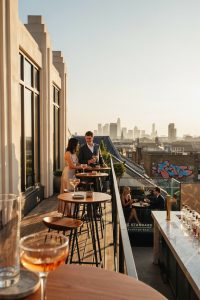
Location: Shoreditch, East London | Style: Art Deco-Modern Hybrid | Vibe: Artistic, Trendy, Energetic
HAZLITT’S HOTEL
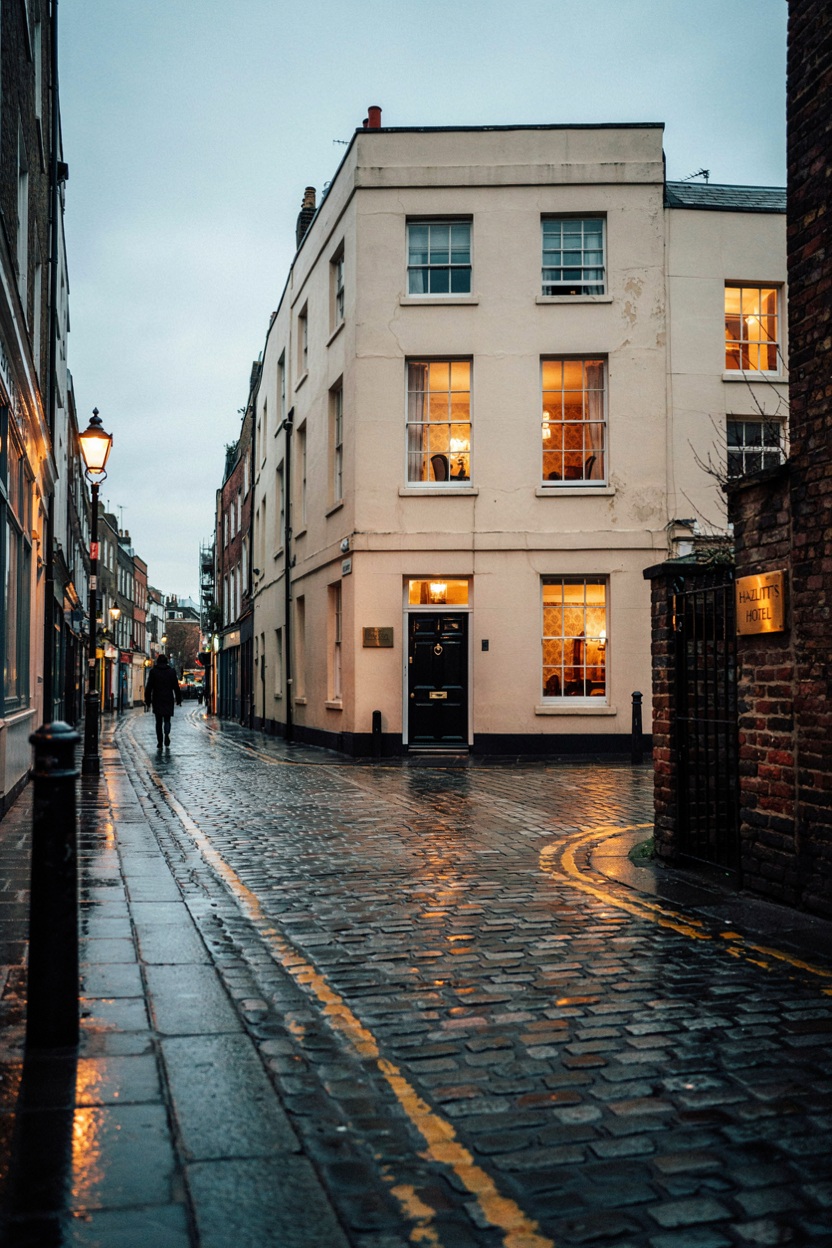
Diving into one of Soho’s labyrinths, I came face to face with Hazlitt’s Hotel’s 1718 door. These three townhouses, time-trapped, appeared like pages penned by Dickens himself. Each room—cream walls, original wood floors, period furnishings—resurrects a Jane Austen character into being. In November’s embrace, four nights here felt like time had frozen. Piccadilly’s chaos was only ten minutes away, yet inside Hazlitt’s, you sat in another century. I felt the texture of vintage fabrics in Berwick Street’s shops. At Ronnie Scott’s, I heard jazz and the story of an owner who transformed from biology teacher to arts impresario. In Balans’ red-lamped glow, I experienced an evening where past and present danced together.
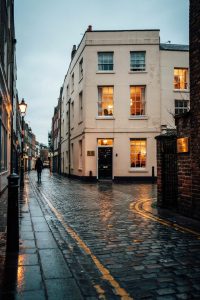
Location: Soho, West End | Style: Edwardian Townhouse Triplex | Vibe: Time-Traveler, Romantic, Cultural
CHARLOTTE STREET HOTEL
Passing through Bloomsbury’s intellectual atmosphere, I stopped at Charlotte Street Hotel’s door—and heard Tim Germaine’s design song. Each room, museum-quality crafted; every color choice, every furniture placement, every accent placed with intention. Here, design isn’t merely decoration—it’s architecture’s soul. A place made for architecture lovers to live within, not merely visit. Five nights in March felt like a design education itself. Positioned in Bloomsbury’s love of museums and books, the British Museum is five steps away; Courtauld Gallery whispers at arm’s reach. Capturing the morning’s quiet hour, I watched street performers at Covent Garden. Victorian library rooms nearly broke my resolution to read—beauty was too consuming. At Café Pacifico, where Oscar Wilde once sat, lemon water’s taste and Bloomsbury’s philosophers met in the same cup.
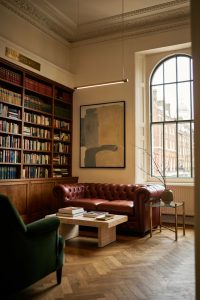
Location: Bloomsbury, West Central | Style: Beaux Arts Hospitality | Vibe: Artistic, Sophisticated, Intellectual
.
THE LASLETT, NOTTING HILL
Walking in Notting Hill’s pastel spirit, The Laslett’s elegant black door called to me silently. Hidden in a Victorian apartment, each design choice, each artist’s signature—becomes a gallery, becomes an art manifesto. Only the fortunate find this hotel; only kindred souls recognize it. Three July nights here meant truly understanding Notting Hill’s essence. A five-minute walk to Portobello Road transported me through time’s layers. I touched the texture of nineteenth-century porcelain. At E1 Café, I lived through morning coffee hour—cup warmth and Notting Hill’s awakening became one. At Notting Hill Bookshop, Penelope Fitzgerald’s last remaining copy whispered to my lips.
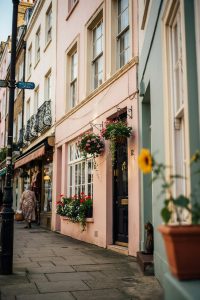
Location: Notting Hill, West London | Style: Victorian Townhouse | Vibe: Bohemian, Art-Centric, Urban
CLARIDGE’S, MAYFAIR
At the heart of Mayfair’s sophisticated breath, Claridge’s stood—the 1930s silver door, all of luxury’s brief gesture. Passing Bond Street’s vitrines, I held my breath, yet that first step transported me to another London entirely. Art Deco’s every line was a designer’s dreamed vision—polished marble, brass light, mirrors within mirrors—doors opening onto infinity. Two May nights living Claridge’s royalty. Green Park five steps away; Oxford Street’s entire luxury below, yet you inhabit another universe. Examining Selfridges’ designer shoes, I understood shoes weren’t merely shoes. At Fortnum & Mason, I tasted caviar and chocolate’s weight. In Claridge’s restaurant, strawberries—London’s exclusive ones, singing with cream, resonant with song—melted on my tongue.
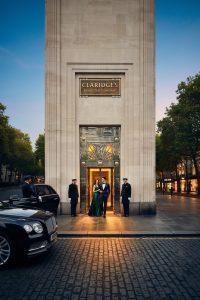
Location: Mayfair, West End | Style: Art Deco Classic | Vibe: Elegant, Sophisticated, Timeless
COVENT GARDEN HOTEL
At the exact heartbeat of Covent Garden Piazza, a stone-carved narrow door—and beyond it, Covent Garden Hotel. Opera’s wind, theater lights’ brilliance, street artists’ mood floating—all echo in the hotel walls. Tim Germaine married British charm to modernity; every room whispers with theatrical masks’ laughter and Victorian mirrors’ memory. Four October nights living on a theater stage. Royal Opera House close enough to share breath; Covent Garden Market’s crowd another performance outside your window. Street musicians’ songs, Donmar Warehouse’s avant-garde weight, Balthazar’s lamb—that smoke-becoming meat—its aroma rising in restaurant walls. I danced in every table where past and present danced.
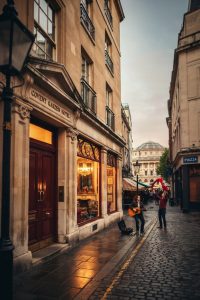
Location: Covent Garden, West End | Style: Edwardian Townhouse | Vibe: Theatrical, Performative, Lively
THE CONNAUGHT, MAYFAIR
In Carlos Place’s oak-lined serenity, The Connaught’s gray facade showed me where state and human meet. Serving since 1815, quietly defining courtesy. Anda Andrei’s design—English grace tangos with minimalist modernity—each space, speaking in silence, writing with color, a contract signed between Human and Prestige. Three November nights revealed Mayfair’s hidden face. Bond Street and Shepherd Market’s secret alleys—with each step, time shifts—from luxury to privacy, from visible prestige to quiet refinement. At Green Park, I walked through seasons. At Burlington Arcade, I saw British craftspeople’s hands in their work. In The Connaught’s restaurant, Helene Darroze’s ceps and fig desserts—a Michelin chef’s soul reflected in each bite.
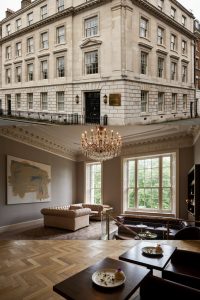
Location: Mayfair, Central London | Style: Edwardian Luxury | Vibe: Graceful, Stable, Prestigious
ROSEWOOD LONDON, HOLBORN
Discovering Rosewood London in Holborn’s quiet breathing space—I felt like an enchanted architect! Designed by Graham Norton, a 1914 Edwardian building reborn. Pierre Yovino’s interior—historical stone and contemporary minimalism in perfect balance—an architectural tango. Four June nights revealed Holborn’s metamorphosis. From working-class revolution to modern grace—each step leaps a century. British Museum five steps; Old Bailey’s justice ten steps. I walked within history at Gray’s Inn. At Ye Olde Cheshire Cheese, I ate from Dr. Johnson’s table—Yorkshire pudding’s steam, time’s journey. At Rosewood’s restaurant, Holborn’s hidden garden vegetables—a chef’s love for earth, its secrets, its becoming.
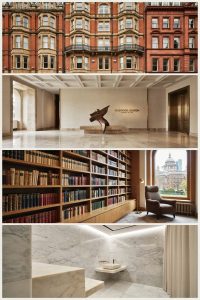
Location: Holborn, Central London | Style: Edwardian + Contemporary Blend | Vibe: Sophisticated Serenity, Design-Focused
DUKES LONDON, ST. JAMES’S
On Dukes Lane’s oak-lined customs, Dukes London whispered hidden and discrete—a palace majordomo’s personal diary locked away. In St. James’s’s heart, Buckingham near but unseen, 1815 porcelain and period lamps holding quiet elegance. Here, grace is silent; privacy is transparent. Two September nights revealed St. James’s elite electric touch. Green Park three steps—swans’ crystal waters like swimming in prestige—Buckingham’s majesty in the same breath. At Fortnum & Mason, tea and pastry hours contained all English civilization’s compression. In Red Room Bar, James Bond’s martini ritual—Gordon’s, gin, olive—time’s pause point, luxury’s least-spoken form.
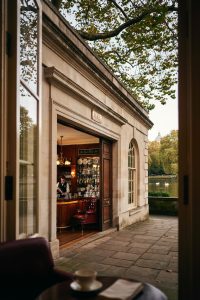
Location: St. James’s, Central London | Style: Georgian Regency Era | Vibe: Private, Diplomatic, Royal
THE ROOKERY, CLERKENWELL
Through Clerkenwell’s dark narrow streets, stone homes, histories nested within histories—suddenly, The Rookery’s door brings Oliver Twist alive. Eighteenth-century Clerkenwell houses, architectural complexes, crackling floorboards and Georgian memory—steampunk spirit’s reverie. Three August nights caught Clerkenwell’s artistic pulse. Five steps to Smithfield Market; ten to Design Museum’s horizon. At St. John, Fergus Henderson’s—the offal master’s—bone marrow became communion; each bite, a pact between animal and human. At Exmouth Market, 1920s antique machinery and glass—I touched Clerkenwell’s working hand.
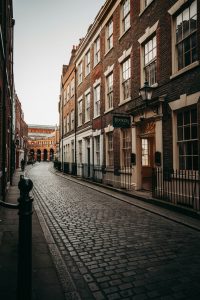
Location: Clerkenwell, Central London | Style: Georgian Townhouses | Vibe: Language of History, Art-Centric, Blue-Saturated
Conclusion
London is a return, not a single visit—a hundred returns. But if you live in boutique hotels, if you experience authenticity, each arrival becomes a new beginning. These ten hotels emerged from five years’ worth of moments—each one, London’s soul whispering, singing a note. If you also dwell between boutique and authentic, if place isn’t merely place but a second self, then in these hotels you’ll find London. Remember: here, luxury dwells not in display windows but in quiet depths. Quality blooms not in design exceptions but in a waiter’s eye’s depth, in a service’s attention, in a space’s intellectual multiplicity, in culture’s quiet labor.