Split, Croatia’s 10 Most Enchanting Hidden Gems (The Places That Stole My Heart Three Times Over!)
Every time I return to Split, a piece of me stays behind. Three visits, two months of living here, and somehow my heart has been scattered across the Adriatic. These stone streets, local fish restaurants, and the shadows of the Palace have transformed me completely. Split is no longer just a destination—it’s a place that lives within my soul, echoing with every breath I take. As I write this guide, Split’s silent song still reverberates in my ears.
Peristyle: The Most Beautiful Way to Face History
This place embraced me on my first step—the heart of Rome, a triumph that has stood for 1700 years. Walking through the Peristyle’s open courtyard, ancient granite columns whispered stories to me. The sound of birds, the coolness radiating from marble stone, and every moment was a collision between past and present. Every corner became a photograph, every column a witness.
I stayed at Hotel Peristil for 5 nights—yes, right beside the palace! I wandered through the chambers where emperors once lived, and each sunset found me enchanted from the rooftop. One evening at 9 PM, I experienced a classical music concert in the empty Peristyle. The columns acted as amplifiers—that sound still resonates in my soul today.
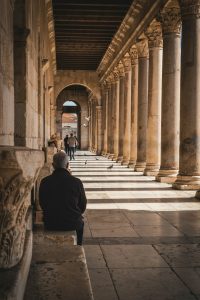
QUICK INFO: Split City Center | 22,000 m² Roman Heritage | Vibe: Majestic, Timeless, Sacred
Trogir: The Heart of a Fairytale Island
I found Trogir and almost considered not leaving. If they call it the “Sister of Venice,” this small island with its narrow streets, flower-filled balconies, and the Cathedral’s elegant silhouette will prove them right. The marble pavement sang beneath my shoes. The scent of olive oil and garlic from an open restaurant doorway transported me to another time—and then brought me back.
During my two nights at Villa Trogir Luxury Rooms, I felt the island’s soul deeply. Climbing the Cathedral’s bell tower, the Adriatic and green hills opened like a canvas before me. As I wandered the narrow streets, a cultural guide appeared as if by magic, and together we explored the depths of medieval architecture. In the evening, watching the sea from the balcony—nothing but silence and a night speaking in starlight.
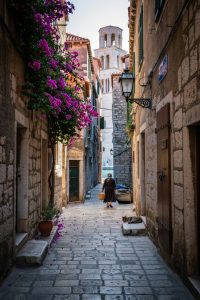
QUICK INFO: Adriatic Coast | 2,600 Residents | Vibe: Elegance, Romance, Mystery
Marjan: The Green Heart Embracing the City
I climbed to the top of Marjan Forest before dawn. While Split slept below, viewing the Adriatic from Teta Utscjenika viewpoint felt like divine access. The light gradually shifted—yellow, orange, then came the sun’s crimson first moment. That instant froze in my memory—still living there, still breathing.
I walked through the forest, somehow lost, and found myself. Standing at Nikolajevska Church’s echoing doorway, I witnessed the silent rebellion of Christian art inside. A stone tomb, 800 years old, still here. I wanted to stay, to fade away—as if invited to somewhere beyond time itself.
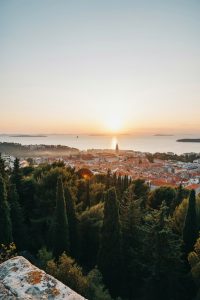
QUICK INFO: Northwest of Split | 57 Hectares of Forest | Vibe: Meditation, Nature, Soul-Seeking
Bačvice: The City’s Cry of Joy
Bačvice Beach is the epicenter where human energy concentrates—the heartbeat pumping life into Split. From my first visit, I understood: this is where Split truly lives. Children play “picigin” (a local water game, wildly fun!), young people dance, middle-aged sunbathers relax. Turquoise water, golden sand, and above it all, Dalmatian sunshine—it was the real version of a film set.
Three days, every morning at 7:30 AM at the beach. I played volleyball (terribly!), bought fresh fruit from the market, and in the afternoons made friends with locals at beach bars. By the fourth day, I belonged to Split’s soul. Bačvice did that—it made me permanent, made me feel the true rhythm of life.
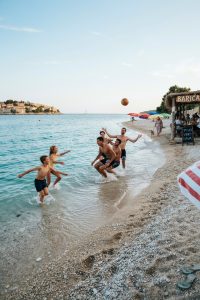
QUICK INFO: Split City Center Beach | 120m Coastline | Vibe: Living, Current, Joyful
Salona: History’s Forgotten Stage
When I arrived at Salona, I felt time itself touching me. Stone blocks, theater remnants, church structures—once 60,000 people inhabited this place. Now only the matter and my quiet presence remain. In the archaeology museum, I saw 2000-year-old inscriptions behind glass—one a slightly worn tablet, another a prayer to the gods. Humans always pray for the same things, live with the same emotions across every age.
I stood in theater ruins—the Emperor’s brightness still held the marble. I walked through church structures. In one tomb, an 800-year-old skull with empty eye sockets seemed to be watching still. History is not merely books; this place is a living testament, the marriage of spirit and stone.

QUICK INFO: East of Split | 5 km² Ancient City | Vibe: Mystical, Silent, Educational
Ghetto Museum: A Silent Cry
Before entering the Ghetto Museum, I was terrified. I knew this place would embed stones into my heart. In a small room, the tragedy of Split’s Jewish community during World War II was preserved. Photographs, belongings, names… A child’s shoe, mother, father—all their doors closed forever. Humanity perhaps showed its darkest face in this building.
Three hours walking through archive documents with a guide. Every page was a family, every family an autumn story. When I left the museum, I wanted to touch something—but what? The air? The past? I couldn’t hold back my tears. I plan to return, next time with a stronger heart.

QUICK INFO: Split Old Town | Small Intimate Museum | Vibe: Cold, Educational, Justice-Seeking
Mestrović Gallery: Between Stone and Soul
When I stepped into Ivan Mestrović’s villa, I felt I was entering the tomb of an artist’s soul. The garden was filled with marble sculptures—some terrifying, some beautiful, all asking “Why do they exist?” Green marble shone in daylight. Ancient mythology, modern contrast, and the ghost of the artist’s dead hands still lingers within.
An art guide took me sculpture by sculpture. Each one was a poem whispered by the gods—Daedalus, Prometheus, Eurydice. Mythology lives here, breathes here. Inside the villa where Mestrović lived, I observed simple rooms, many books, minimal possessions. The artist wasn’t wealthy materially, but spiritually rich beyond measure. That simplicity, that austerity—it wrote a lesson for all of us.

QUICK INFO: West of Split | 2.5 Hectares of Art | Vibe: Surgical, Mystical, Human Wonder
Kastelet Suberoza: Memories Whispered Over Wine
In an old basement of Split, a man named Marko and his wine culture hide away. Kastelet Suberoza—fitting only 30 people, with stone walls and aged brick, a temple living in the quiet light of wine bottles. Dalmatian wines, in their purest and most local form, awaited here—with a welcoming spirit for me.
Marko and I talked for two hours. Every wine bottle had a face: Vugava from this vineyard, Plavac Mali from those mountains. His girlfriend Ivana (a chef!) arrived, and I joined them at the table—cheese, prosciutto, fish. At 9 PM, only we existed in that basement. Shoes spoke like history on the stairs above. Behind us lay ancient stone, before us wine, above us time—emptiness and abundance united at one table.
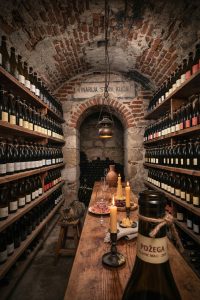
QUICK INFO: Split Old Town | Intimate Wine Bar | Vibe: Local, Measured, Authentic
Riva: The Theater Stage of Life
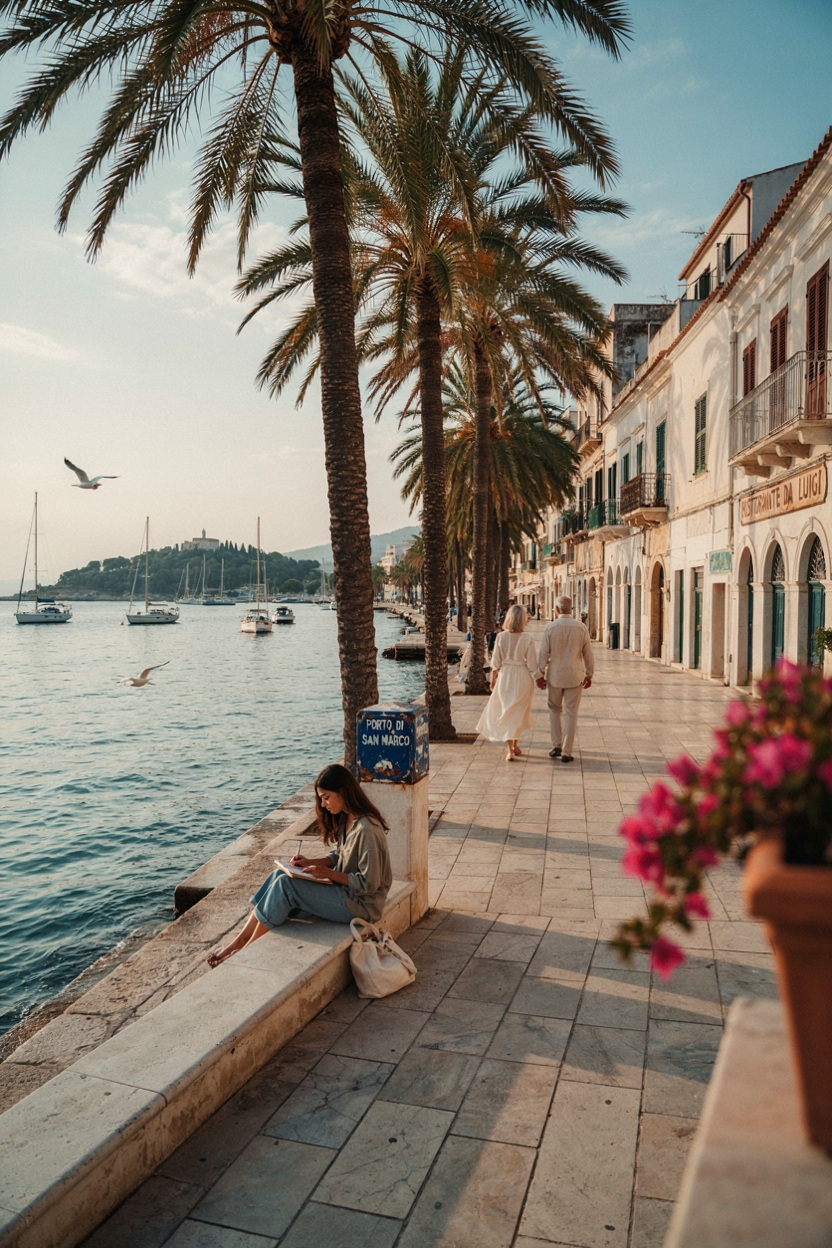
At any hour in Riva, the waterfront reinvents itself. 7:00 AM: Workers drink coffee, read local news. 12:00 PM: Tourist photographs unfold like a canvas. 8:00 PM: Lovers walk hand in hand, music drifts from afar. Palm trees, stone buildings, harbor sounds, and every moment Split’s pulse beats.
In the mornings, I drank cold Dalmatian coffee (like Turkish coffee, but with Dalmatia’s whisper to it). Street musicians passed with guitars. At the fish market, the same vendors sell fresh catch—same people, 30 years running. People live rooted here. As for me, I decided to build a home in Riva’s heart. I chose to move with Riva’s rhythm and imagine our reunion.
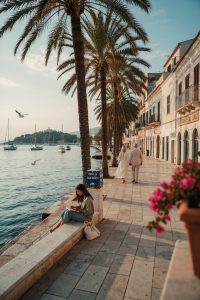
QUICK INFO: Split City Waterfront | 5 km Lively Street | Vibe: Dynamic, Social, Life Source
Diocletian’s Palace Basement: History’s Underground Library
The basement. Descending into it, I felt myself sinking into time itself. Fine marble columns, ancient ovens, storage chambers—every stone lived for 1700 years. Light is scarce, shadows abundant. As the archaeologist guide showed me the water systems, he spoke of ancient ignorance and knowledge united. The “Hypocaust” system—radiant floor heating! Rome knew how to live.
2.5 hours in the basement. Standing among theater ruins. I followed the water pipes—they’re still functioning (yes, 1700 years later!). In storage rooms I imagined: gold coins, grain, olive oil. Standing in one chamber, with a thousand tons of stone above me, there was still a whisper of Mediterranean sun. Perhaps the gods still linger here, silent sentinels.
When I emerged from the basement, I dined at Fruits of Dalmatia restaurant. Crni Rižoto (cuttlefish risotto, black as time’s ink!) and Dalmatian wine. My belly was full, but my soul remained behind those sealed underground doors. That underground place, in every sense of the word, changes a person’s entire existence.
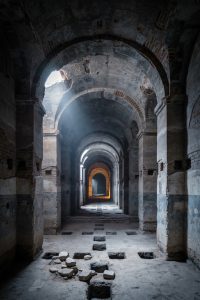
QUICK INFO: Palace Basement | 7,000 m² Ancient System | Vibe: Mystical, Archaeological, Godlike
Conclusion: Split, My Heart’s Permanent Address
Is three visits ever enough? Never. Whether you’re a traveler lost in Peristyle’s history, an art lover weeping at Mestrović’s stones, or a romantic tasting love in Kastelet’s basement—you only scratch the surface of Split’s layers. This city changes you. It has changed me.
If you, too, are drawn to luxury boutique accommodations, local flavors, and the depths of history—Split awaits you. When you go, remember me. If you have coffee at Riva at 3:00 PM or wine at Kastelet at 9:00 PM, perhaps we’ll meet there. Split’s silent song still echoes in my ears.