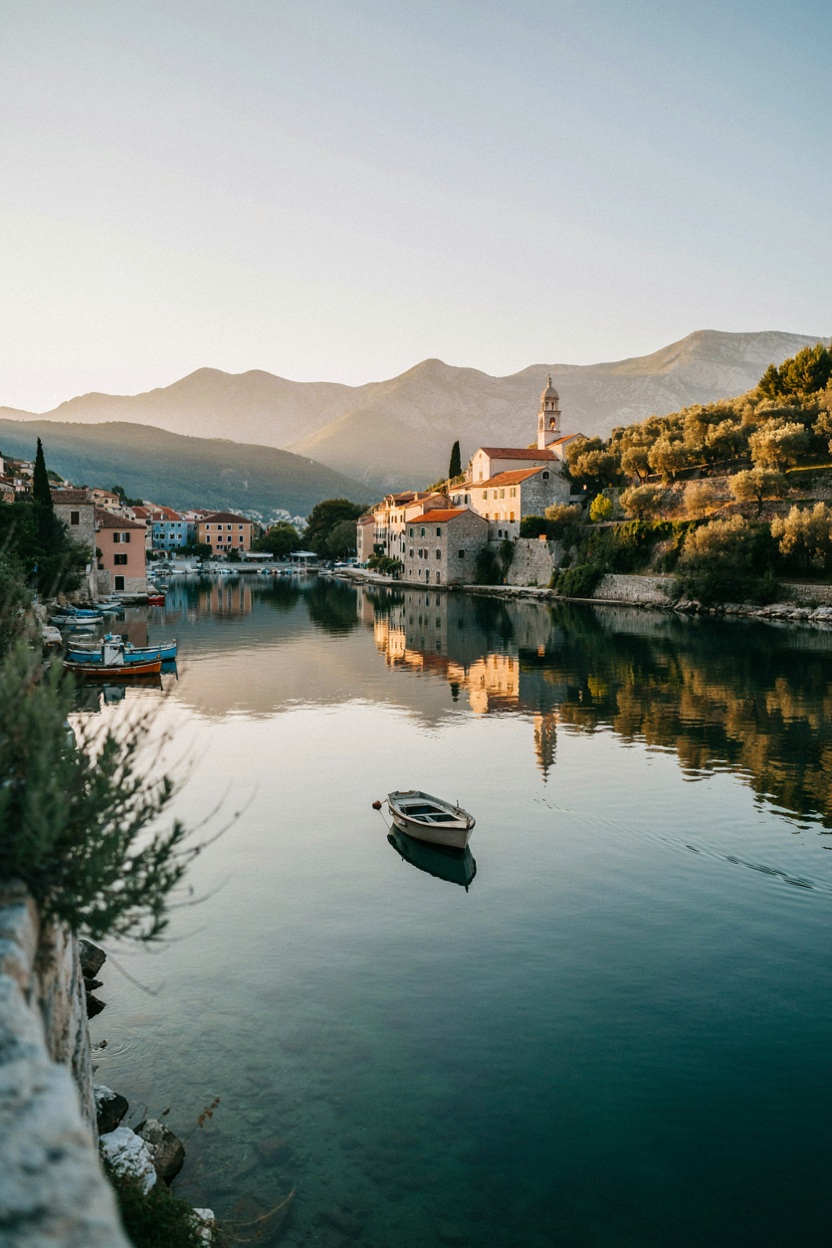
When my eyes first opened to the crystalline Adriatic of Sarandë, a love that began with magic never ended. I didn’t just visit five times—I kept returning. Albania pulled at me as if there were thorns inside my shoes, gripping tight. Sometimes for months, sometimes for mere moments. But with every departure, I left a piece of myself behind in my heart.
Mythology, Renaissance, Ottoman whispers and those legendary local dishes—all in one frame. Tour guides skip this country, but travel snobs know: Albania is a secret. Where aesthetic, luxury and authenticity matter, this place awaits you. With my own eyes, through my own body, I felt these 10 treasures. Let me whisper them to you. Perhaps you’ll return too.
Sarandë — The Silent Museum of the Adriatic
Pastel buildings, that water—as if God designed it himself. When you take a step, centuries stick to your shoes, but here only time flows. When I first entered Sarandë, it was like a painting leaping into canvas. White fishing boats, blue doors, lemon-yellow gardens, each with its own quiet story.
4.5 hours by bus from Tirana, then to Drymoni Hotel—cradled by the sea, sleeping in bungalows. Those bungalows were like nests of birds in willow trees. Mussels at Mussel House in the morning (the chef’s name was Stavros, Greek-born, had been there 30 years), chasing dolphins by boat (yes, I saw them), ancient churches inside the sea—walls mixed Greek and Roman stone. And one night, like a librarian with my warm tea, I read Camus (L’Étranger) facing the sea. That evening, I truly understood what I was foreign to.
Gjirokastra — Where Centuries Stick to Your Shoes
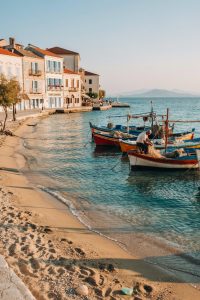
As you climb the hill, each house begins telling its story. Silver stones, drooping balconies, the Ottoman’s silent rebellion. In Gjirokastra, take a step and centuries stick to your shoes—tangible, warm, heavy. You breathe history like air here.
Four hours by car from Tirana to Kalemi Hotel—sleeping and waking in an 18th-century mansion. My feet cried climbing the castle (mine did too, if I’m honest). I read history on Skenderbeg’s house walls—war writings, letters, his daughter’s name inscribed in heartbreak. From the Citadel at night, I watched the city—stars swallowed it in light, as if the sky held the earth and wrapped it tight. From the bazaar, I bought antique prints (from Ismail, grandson of the Janissary’s merchant, 60 years old, whose father smuggled old written books from the Venetian period)—each turned in centuries-old merchants’ hands.
Berat — Where Two Faiths Meet on the River
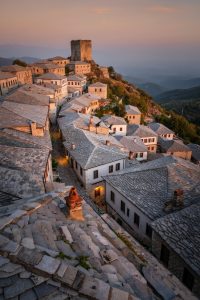
Two sides of the Osumi River, two faiths, one peace—as if God wanted to resolve his own contradiction here. In Berat, the line between ethnicity and belief dissolves in your heart. White houses, black roofs, bells and calls to prayer at every corner. This place writes borders on your soul.
Two hours from Tirana to Hotel Kala. Staying in a historic mansion (the window placed to see Osumi—as if someone 400 years ago knew who would look). Walking castle walls, the silence of Kasim Pasha Mosque (an imam prayed inside, we sat wordless), crosses of Onnophrios Monastery, a boat ride down the river. This place quiets you—no words escape. At the rooftop garden at night, I ate Qofta (made with grandmother’s recipe, the chef said, with daphne leaves—that aroma taught me what kindness tastes like). Local white wine, and beneath me the river’s black hair shone silver in moonlight—that night all cultures made peace.
Vlore — Albania’s Beating Heart
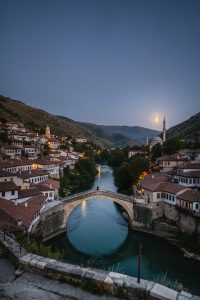
In Vlore, sea and history walk arm in arm—holding each other. Fragments of ancient Dyrrachium, republic rallies, that Sahat Tower—this place beats like Albania’s heart. Listen.
Three hours by car from Tirana to Seascape Resort (seaside, balconies with sea views from bed, the manager brought us coffee—his name was Fiqiri, an old war survivor, prosthetic leg but a full soul). I sat in seaside fish restaurants, read war histories in the museum—Skanderbeg’s chest-shot clothes behind glass. I watched sunsets from the Sahat Tower (and cried, I must say). Branzino a la Sal—fish, salt crust, lemon—so simple it became divine. The chef gutted the fish carefully, my eyes welled (not from the food, but from that chef’s kindness), and the entire Mediterranean was in my mouth.
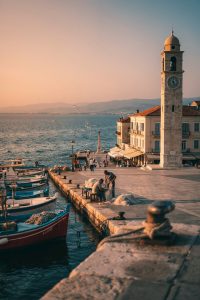
Llogara Pass — The Road Itself is the Destination
At 1027 meters, beneath clouds, the sea merges with sky. At Llogara Pass—the road matters more than the traveler. Each turn opens a new frame. The panorama is cinematic.
I used this pass from Sarandë to Vlore. I stood for hours above (wind writing on my skin). I climbed with mountain guides, watched birds (an eagle—its name is Shqipe, the country’s name comes from this bird), heard the bells of goats (that sound so clear it held music). An old local grandfather—his name was Gjeç, 75 years old, toothless but bright-eyed—served us homemade Byrek (his mother’s mother’s mother’s recipe, he said). Cheese and herbs inside dough, falling from clouds. Looking at that man’s face, I understood what it means to be human—perhaps to know what cannot be known.
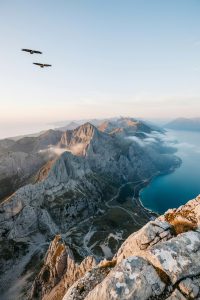
Kotor Bay — Green Waters in a Midwife’s Arms
The bay—unlike its name—isn’t open, it’s enclosed. Like a midwife cradling its own home. In green waters’ embrace, olive trees stand like potted plants. Here time flows backward—the clock complains about the seconds.
Four hours from Tirana (brief Montenegro detour) to Hotel Königin (Venetian architecture, from the 18th century, truly old, truly beautiful). Kayaking, ancient Butrint (Homer wrote of it, we only saw ruins), river delta, fish markets (fish vendor Anastasia, Greek, 50 years old, carried fish in her own bags—spoke to each one like they had names). At the rooftop garden, I ate Fërgesë—egg and sauce, cooked in a pan, so pure you can’t help but think God made it this way. And there, at that table, beneath night sky, I cried—at the poverty I’d seen in the fish market, at the 75-year-old toothless man, at the presence of that egg.
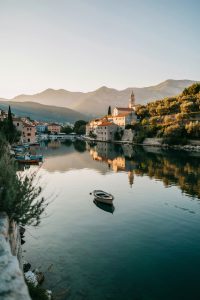
Valbona Valley — Song at Every Step
Valbona—its name itself becomes a melody on your tongue. The Alps’ silent heart. Flowers, rain, mountain mist. There’s a song at every step—birds, wind, feet striking rocks. Instagram isn’t real here; here reality surpasses Instagram.
5.5 hours trekking from Tirana, I reached Riverside Hotel (along the Valbona River, wooden structure, manager Petrit, 35 years old but with the mountain’s soul in his body). Valbona-Theth hike (2 days, 20 kilometers, 6 hours daily), mountain guides, alpine lakes (water at 2 degrees, I still swam), tea with locals (a woman named Rozafa, 60, grew flowers in her garden, under apple trees). A guide named Genti, forty years old but wise as a century, pulled Pita me Mish from a stone oven (he’d cooked the meat himself in the morning, salt and onion were all it needed). Beneath clouds, at 2000 meters, there was food, there was life. Genti told me: “The mountain changes you. You descend as another person.” The person who descended wasn’t me.

Prespa Lakes — The Listening Eye of Three Nations
Prespa—where Albania, North Macedonia, and Greece meet at the lips. One lake, three borders, infinite peace. Listening. Birdwatchers’ paradise, travelers’ farewell.
1.5 hours from Korça (Albania’s eastern cultural center—the library is magnificent) to Hotel Prespa. Kayaking, Bakli Monastery (11th century, icons inside, one of Mary’s face so sad it aches—a praying priest watched us, unbothered), migrating birds (their eyes changed the sky’s color as they passed), Macukje village. That trout (Pstruga), caught before dawn—fisherman Petar, 70 years old, fishing for 60 years. Lemon, garlic, the lake’s warmth in one sentence—the fish melts in your mouth like butter. I asked Petar if the lake’s water was angel water or fish water. He smiled, gold teeth, “both,” he answered.
📸 AI VISUAL PROMPT: Ultra-realistic nature photography of serene mountain lake at tripoint border of Albania, North Macedonia, and Greece, perfectly calm water reflecting sky and distant mountains, ancient Byzantine monastery with red-tiled roof perched on rocky shoreline, migratory birds in flight over water—cranes and eagles soaring, golden light at sunset, fishermen in traditional boats, shot on Canon R5 with 28mm lens, tranquil wilderness photography, hyper-detailed bird details, fine art nature style, warm golden color grading, cinematic composition, pristine ecosystem aesthetic
Durrës — Soul Speaking Behind Walls
Durrës—Albania’s oldest city. Roman theater, 2000-year-old mosaics, all on one street. Here history still breathes.
30 minutes from Tirana—Hotel Adriatik Palace (five-star, seaside, old Yugoslav luxury). The Amphitheater (20,000 people sat in Roman times, now only the dead sit), learning ancient Dyrrachium with a guide (Arben, archaeologist, 45 years old, spoke of each mosaic piece like it was his child), the museum, buying fish from the market and cooking it myself—the hotel chef helped. Those mosaics’ eyes watch you, standing silent like Ottoman towers. And in that theater, I sat—as if 2000 years before, theater played, soul spoke between walls.
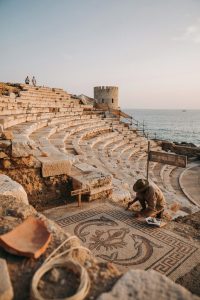
Tirana — The Colorful Dance of Change
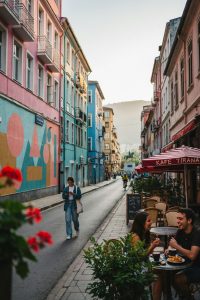
Tirana—holds your expectations captive. Colored buildings, cafe culture, people’s warmth. City life here stays human. It wants to open your eyes.
Straight from the airport to Vila e Rozafa—a boutique hotel in an old government palace. Architect Fatos showed us around (his name was Fatos, 55, laughing softly through each room’s story—maybe protecting his pain with that laugh). Skanderbeg Square at night—singers, directors, university students, tourists, poor people, all on the same square. Art galleries by day (painter Luiza, 30, “God made the country colorful, I just follow,” she said), Blloku (once the communist leader’s neighborhood, now trendy bars, bitter-sweet mix), libraries where people worked like culture bees. Tavë Elbasani—rice, lamb, yogurt, baked—the chef (named Dritan, his mother Grita, 80, still helps in the kitchen) told me: grandmother’s recipe, his father died in war, each time he makes it he loses a little more. In Tirana’s lights, I asked “what is this really?”—and this time found peace instead of answers.
Conclusion: Albania Awaits You (Always Has)
Albania isn’t a blank space on tourism maps—it’s a secret. Tour guides skip it, but if you’re not a tourist (and you’re not), you know: Albania pulls you, because your soul stays there.
In this corner of the Balkans: living history, touchable nature, wondering people. Sarandë’s pastels, Gjirokastra’s stones, Berat’s river, Vlore’s heartbeat, Llogara’s mist, Kotor’s green, Valbona’s song, Prespa’s listening, Durrës’ dead soul, Tirana’s colors—each settles in a fold of your heart.
Discovery in every street, stories in every meal, soul-bonds in every smile. Albania won’t forget you. You’ll return finding your heart there, waiting to be spoken of with salt and lemon. Because this country—you’ve left but you remain.