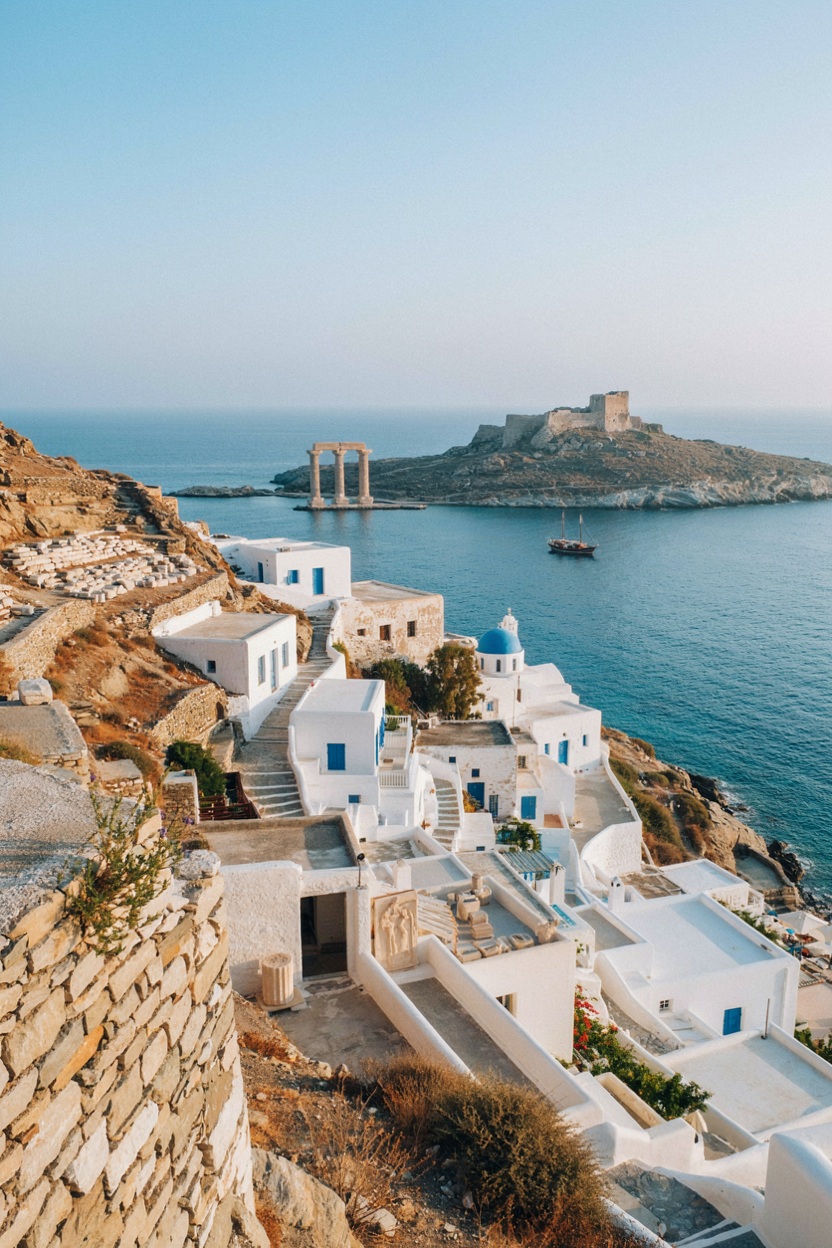
10 Breathtaking Places to Visit in Greece
(That Stole Pieces of My Heart Along the Way!)
Greece… just two words, but for me, it’s a lifetime of passion. Twelve times I’ve set foot on this enchanting land, spent hours swimming in its seas, lost myself among ancient stones. From the deep blue waters of the Aegean to the temples of ancient Athens, every corner is etched into my soul. From luxurious hotel awakenings where my first glimpse is the Aegean blue, to tasting salt at local restaurants – as a traveler devoted to aesthetics and authenticity, I want to unveil the 10 most stunning corners of this ancient civilization. Come with me on a journey where you’ll lose yourself in the shadow of the Acropolis, in the light of white-roofed islands, or in the clear waters of the Aegean. Let’s discover the heart of Greece together!
1. Santorini – A Dream Suspended Above the Sea
The moment I stepped onto Santorini, I felt my heart skip a beat. Standing against the Caldera’s face, Oia deceives the sky with its whiteness, and blue domes appear as if they emerged from the sea and were placed here. In Akrotiri’s 3,600-year-old Minoan frescoes, the brightest period of Minoan civilization lives on; the wall paintings of dolphins, flowers, and female figures are so vibrant that you feel their pigments were applied just yesterday. From crimson rooftops to spotless marble streets… every step is like walking through a postcard scene. When the sun sets, the shimmering water of boats leaving Oia dances with the sky’s pink and orange tones, and being there feels like crossing into another dimension.
A fifty-minute flight from Athens Airport, then an eight-hour ferry journey from Piraeus brought me to the gates of this paradise. On the ferry, a Greek woman beside me spoke of Santorini with glowing eyes and said, ‘This island steals your soul.’ Those words proved true from that moment on. At Katikies Cliff-side Suites, there was an infinity pool and a Caldera view that made me want to reject the entire world – waking each morning, my first sight was a harmony of deep blue sea and white-roofed buildings. I spent three hours at Akrotiri Archaeological Site, experiencing 3,600 years of history with every step – especially in the ‘Frescoes of Women’ room, I felt as if I was seeing through the eyes of ancient Minoan women. At Thalassina Caves with their hot mineral waters, every cell of my body felt healed, my spirit felt complete. Getting lost in Fira’s narrow streets, even when I found my way, I felt nostalgic to get lost again.
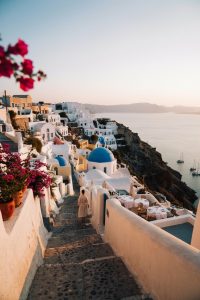
📍 Location: Aegean Sea, Cyclades Islands | Population: 16,000 | Vibe: Romantic, Divinely Magnificent, Time’s Frozen Moment
✨ My Most Unforgettable Moment:
At Patriarch Cafe’s terrace table, fresh tomatoes and white feta cheese were set before me, a complete representation of the Aegean’s purity – horta prepared with volcanic olive oil. When the Assyrtiko wine from volcanic soils touched my lips, I felt as if I was drinking the sea itself. The wine’s mineral taste, the sea salt, and the soft bitterness of the oil merged with each other. As the sun was setting over the Caldera, the sound of waves creating music, laughter at the tables and the Aegean breathing itself – within that moment, I understood ‘the purpose of life.’ As the waiter said goodbye, ‘You’ll return,’ I replied, ‘I’ve always been here.’
2. Mykonos – The Paradox of Chic Seekers
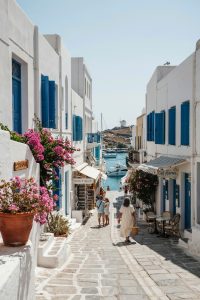
When I first arrived in Mykonos, I felt as if I had stepped out of a painter’s canvas. The Kastro district, an unwritten residence of urban angels; its narrow streets surrounded by blooming oleander flowers – every angle would make a perfect photograph. Venetian architecture’s delicate craftsmanship, blue doors and white walls, as if they’ve integrated the sea’s color into house walls. While wandering through Chora, social layers lived invisibly alongside each other – at one table a billionaire with a luxury watch, at another a struggling artist, all beneath the same whiteness and blueness.
I flew from Istanbul, transferred through Athens, and arrived at Mykonos at 2:00 PM. The bus to Kinis Hotel – small but meticulous, a boutique hotel by the sea – became my home. From my balcony, turquoise sea sparkled under the sun; waking to such a view every morning felt like losing air. At the Mykonos Archaeological Museum, I examined ancient Greek artifacts – especially the marble sculptures from the Tumulhus of Rheneia, their empty eye sockets spoke so loudly of silence. Taking a boat to Delos Island, where Apollo was said to be born, I walked on the same stones where gods have been invoked since 1100 BC – it was both unsettling and exhilarating. In the silence of Panagia Paraportiani Church, with white walls and blue-domed roof, sitting alone yet never alone, I felt the transition from insecurity to freedom
 .
.
📍 Location: Aegean Sea, Cyclades Islands | Population: 10,000 (Summer: 50,000+) | Vibe: Destructively Chic, Bohemian Luxury, Social Theater
✨ My Most Unforgettable Moment:
At Meze Kuzine for lunch, sitting alone at one table yet never alone. Warm pita and tarama – fish roe paste, lemon’s sourness and olive oil’s soft bitterness dancing on my lips. Feta cheese, selected tomatoes, and onion-based horta salad, so simple yet so authentic, as if prepared by village women at their own family tables. Beside me sat an elderly Mykonian couple, who smiled at me and said in Greek, ‘Hello, friend.’ Those three words took me deeper. Mykonos wasn’t just an eating island; it became a place where loneliness shatters, where human connection flowers.
3. Delphi – The Oracle’s Whisper Center
Arriving at Delphi, I felt something strange in the air. On the slopes of Mount Parnassus, rising above 500 meters, this ancient sacred site is not just a place – it’s a door between gods and humans. The stones from Apollo’s temple, where Pythia once fell into ecstasy through ethylene gas in this historic place, standing here feels like walking on the border between history and hallucination. Doric columns, harmed by time yet spirits unbroken. Walking there, you hear 2,500-year-old whispers – as if the gods are still there, just not speaking in our frequency. I sat on the theater’s columns, infinite sky above me, ancient Greece below – at that moment, I wasn’t a tourist, I was an explorer.
I rented a car from Athens, 180 kilometers of mountain passes. Along the way, I passed through water falls from Pleistos Valley, almost turning back because the beauty hurt – these waters seemed to carry 3,000-year-old echoes. At Pipero Hotel for one night – from the balcony, Mount Parnassus’s profile was perfectly visible. I woke at 5 AM and walked to the Delphi Archaeological Site, no one else around – just me, stones, and ancient silence. At Apollo’s Temple, a self-guided tour where Pythia’s oracle chamber felt sacred, at Kastali Spring (sacred water source) – where Athenians performed ritual purification – I washed my feet, the water’s coldness charged my soul. In the Delphi Museum for two hours, seeing the Charioteer of Delphi sculpture eye to eye brought immeasurable joy.
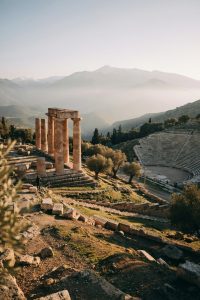
📍 Location: Central Greece, Boeotia Region | Population: 2,500 | Vibe: Mystical Prophecy, Gateway to the Other World, Spiritual Awakening
✨ My Most Unforgettable Moment:
After exiting the Archaeological Museum, I went to Tholos Restaurant. On my plate came ‘pastitsada’ – chicken, onion and healing Pelion herbs prepared in a light red sauce with slow cooking – the chicken so tender my teeth were unnecessary. Local Retsina wine, with its resin taste, created a merciless yet tender experience in my mouth – when I finally understood that resin taste, antiquity’s aroma entered my nostrils. At that moment, I wasn’t nourishing my body; I was time-traveling – 2,500 years ago, Greeks perhaps sat at the same table eating the same dishes. Every bite fitted into a historical frame.
4. Athens – The Dance of Ancient and Modern
When I went to Athens, I felt like two cities were living simultaneously. Above, the white marble Parthenon of the Acropolis continues to greet the goddess Athena; below, the Psyrri district, with its graffiti walls and millennial cafes, announces the 21st century. This contradiction makes Athens different from all other cities. They carry Ancient Greece’s legacy within the violence of modern life – and they do it beautifully. Walking through Plaka’s narrow streets, beside 2,400-year-old walls, blooming petunias and lavender flowers lightened time’s entire weight.
I spent three nights on the rooftop terrace of the Electra Palace Hotel in the heart of Athens. Opening my window, the illuminated Parthenon shone like a prayer written in the sky. I walked the Acropolis for four hours, self-guided, touching every stone – it was more than archaeology; it was spiritual ascension. In the Benaki Museum’s Byzantine art collection, I got lost – golden backgrounds and iconic Jesus Christ figures were so deep they cut the air – at that moment, the line between art and belief disappeared. At Monastiraki Antique Market, a 1950s red radio, old Ottoman coins, forgotten love letters were being sold – owning the past is strange. On the way to Dionysos Theater, Plaka’s gloomy streets seemed to stack time upon time.
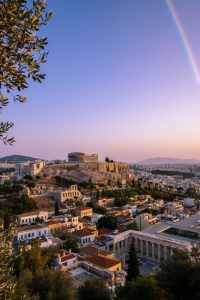
📍 Location: Central Greece, Attica Region | Population: 3.7 Million | Vibe: Antiquity Within Modernity, The Athens Paradox, Children of the Gods’ City
✨ My Most Unforgettable Moment:
At Kouzina Restaurant in the Psyrri district, served by a Michelin-starred chef came ‘htipiti garides’ (shrimp paste) topped with soft carrot sphere and sweet flower petals. Sweet-salty-spicy-soft – four tastes in one plate. Green pepper sauce, the Aegean’s liveliness ignited on the plate as seafood arranged like real art. The chef came to my table and asked, ‘Is this your first Athens experience?’ No, I said, but ‘with this meal I felt Athens’s heart,’ I replied. He smiled, as if we shared a secret – Athens’s true essence wasn’t in tourist guides but in the chef’s kitchen and at the dining table.
5. Rhodes – The Knights’ Medieval Castle Still Awaits
Stepping into Rhodes’s Old Town felt like stepping out of fairy tales. Stone walls, Venetian architecture, narrow streets – every corner holds a geographic contradiction, every stone carries a crusade’s mark. The Palace of Knights’s grand entrance attacked time alongside me. Palm trees and lemon trees, stepped stone streets, blooming bougainvilleas – Medieval mixed with Tropical. Climbing Lindos Acropolis, the sea below blue, the sky above yellow – between them, me, a witness to Rhodes’s stories, not just a tourist.
A one-hour flight from Athens brought me to Diagoras Airport. I stayed five nights at Lindos Blu (5-star luxury) – the pool seemed to stretch forever, the terrace overlooking the sea seemed to whisper Rhodes’s entire history. At the Palace of Knights, three hours self-guided, I felt walls speaking – especially in Treasury of Nuns and Grand Master’s Bedroom, I felt 14th-century spice trade wealth. Climbing Lindos Acropolis (300 meters) wasn’t difficult but invaluable – standing on Athena Lindia Temple’s remains, I heard ancient prayers. Filerimos Monastery’s silent atmosphere made me feel I was living by hermit principles. Old Town’s antique shops showed 1930s oranges, 1950s silver musicians – they turned time into a collection.
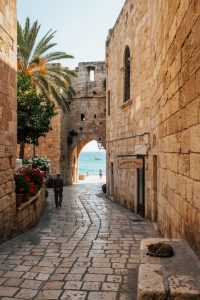
📍 Location: Aegean Sea, Dodecanese Islands | Population: 125,000 | Vibe: Medieval Heritage, Knight Nostalgia, Time’s Layered Deposits
✨ My Most Unforgettable Moment:
At Marco Polo Cafe, at a marble-flowered terrace table – because Marco Polo himself visited Rhodes in the 13th century, and this cafe’s name honors that memory. ‘Pastitsio’ (Greek lasagna, chicken meat, béchamel sauce and layers), feta cheese and Tsantali red wine. The cheese’s saltiness burned my tongue, the lasagna’s heat warmed my body, the wine’s body matched the meal. Drinking wine, I traveled to old Rhodes – 14th-century knights perhaps drank similar wine (Rhodes’s harvests were similar), ate the same cheese – time and food become best friends, I told myself.
6. Meteora – A Bridge Between Gods and Humans
Meteora’s first view stole my breath. Exiting Kalampaka, towering rock columns reaching for the sky – these granite pillars up to 300 meters tall, crowned with Byzantine monasteries perched impossibly high. A zero-other phenomenon between God and earth. The spiritual atmosphere is so powerful, you feel a non-human presence – as if the combination of cold wind, early morning light, and wet stone’s aroma pulls you to another frequency. Climbing narrow, carved stairs – as if monastery dwellers truly spoke with God, which is why they lived here; because from here, human worries are distant, while God is very near.
I drove from Athens for 3.5 hours. Hotel Meteora’s room was simple but very specific – its window faced directly toward the monasteries. At 4 AM I woke; while people still slept, monastery bells rang – that sound, shattering time, calling spirits. A trill in silence – that sound wanted to lift me. I climbed to Great Meteoro Monastery (the largest, from around 1300 BC), wooden stairs so narrow my shoulders touched both sides of the stone – monastery dwellers did this intentionally, restricting human exit. The museum’s 14th-century Byzantine icons were paintings escaped from iconoclasm, possessing painful beauty – every icon showed hammer-strike damaged faces, later restored. I visited Agios Stefanos and Varlaam monasteries – each had its own silence, its own light. In Kalambaka town’s morning market, fishermen displayed fresh catches, local women haggled at stalls – this living human center completed the monasteries’ peaceful void.
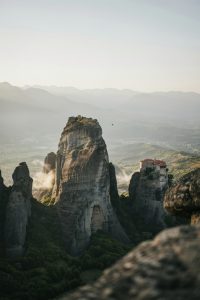
📍 Location: Central-Northern Greece, Thessaly Region | Population: 4,000 | Vibe: Mystical Flight, Spiritual Ascent, Hermit’s Silence
✨ My Most Unforgettable Moment:
At Argo Taverna near Volos, I entered spiritually exhausted from monastery visiting. ‘Pastitsada with Pelion herbs’ – prepared with herbs from the mountains, floating in chicken broth. Fresh dill, sage, myrtle – each herb’s aroma broke the monastery’s tentative peace, combining spiritual ascent with body’s needs. Red wine with steel taste, seemingly repeating monastery bells’ sound. During that meal, I understood – monastery is where soul ascends, meal is where body descends; both are worship, all rituals.
7. Crete – Zeus’s Birthplace and the Cretans’ Stubborn Passion
Crete isn’t Greece’s largest island, it’s its most stubborn. The journey beginning from Venetian castle Rethymno, climbing mountains to reach Minoan civilization’s (2000-1450 BC) collapse views – this island is a historical suffering’s memory. Palm-lined beaches, fresh olive oil from mountains, and most importantly, Cretans – generous-hearted, noise-loving, never-giving-up people. Walking in Rethymno, walls don’t reveal their age, but ages speak with me. Climbing toward Samaria Gorge, human value shrinks, but soul’s value grows.
I flew from Athens (Iraklio Airport, 1 hour 15 minutes) and stayed at Fortezza Boutique Hotel in Rethymno (4-star, beneath the old Venetian castle). Opening my window, walls seemed to look at me – 400 years of Venetian rule through Ottoman sovereignty stood there. At Knossos Archaeological Site for 3 hours, Minoan frescoes turned me into a time traveler – 3,600-year-old paint! In the ‘Frescoes of Women’ room, female figures seemed to dance, as if ancient Minoan dancers came alive before my eyes. At Samaria Gorge, 16 kilometers, mountain to sea hiking (5 hours) – my eyes wanted to cry from muscle exhaustion and spiritual enthusiasm merging, but my feet kept moving. Swimming at Plakias Beach was pure soul and body therapy. Wandering Rethymno’s Antique Market, I found a 1920s Crete map – the strange pleasure of owning the past led me to buy it.
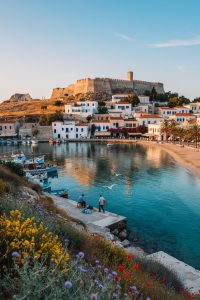
📍 Location: Aegean Sea (largest island) | Population: 630,000 | Vibe: Ancient Tradition, Cretan Resistance, Time’s Palimpsest
✨ My Most Unforgettable Moment:
At Avli Restaurant in Rethymno, fresh ‘htapodi’ (octopus) from the morning’s fish market, fried and fresh lemon’s hot squeeze. A briny taste, the sea entering my whole body. Grilled local fish and ‘mizithropita’ (fresh white cheese pie) – the sensation of eating at a Cretan wedding celebration. The waiter explained the cheese’s history – ‘Cretans have made this cheese the same way for 1,500 years,’ he said. That work, belonging to civilization through food – so powerful, as if hand-holding Minoan civilization itself.
8. Paros – Marble, Fishing Boats and Forgotten Nostalgia
Discovering Paros, I found Cyclades’s ‘secret heart.’ In Naoussa’s small harbor, painted fishing boats, fresh fish market’s morning aroma – far from tourist crowds, real Greek maritime life unfolds. Marble quarries’ (quarries) abandoned places resemble ancient world’s inheritance’s edges – before leaving, I felt fear there, as if hearing underground caves’ calls. Walking narrow streets, bougainvillea flowers stick to my hair, salty air penetrates my skin. This island, unpretentious yet authentic – the place where you witness, not just visit.
I took a ferry from Mykonos (Parikia harbor, 2 hours) and stayed at Yiannis Hotel in Naoussa (4-star boutique, seaside). From my balcony, early morning fishing boats and Aegean sunset – like a local friend, not a tourist. At Marble Quarries tour, I visited working quarries and local masters – I learned marble is more than stone; it’s Paros’s soul. Master Nikos’s rough hands, marble-dust painted face, 40 years living with marble – talking with him, I understood marble craftsmanship isn’t a profession, it’s a calling. At Naoussa Harbor, going out on fishing boats, observing seafood harvest – fish’s panic when caught in nets was life’s nakedness – but fishermen worked quietly, spiritually harvesting. At Kolympithres Beach, playing on granite rocks, I felt carrying Paros’s melody inside me. Camping on Antiparos Island, sleeping in a small boat under moonlight – every moment felt like cinema.
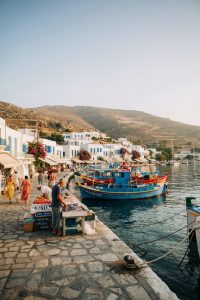
📍 Location: Aegean Sea, Cyclades Islands | Population: 12,000 | Vibe: Pastoral Marble, Fisherman Philosophy, Nostalgic Authenticity
✨ My Most Unforgettable Moment:
At Neon Restaurant in Naoussa – fresh ‘ktapodi psito’ (grilled octopus) from the sea, fresh sardines (gavros). That brittle fish texture, lemon and sea salt merged. The island’s own marble-sourced water’s cleanliness and local ‘Paros Mavroudi’ wine (red, earth-scented) – as if they fermented Paros’s soil itself. During that meal, an elderly couple beside me held hands – they never spoke, just held. Silver shine in their hair, thousands of seaside days in their eyes. I’ve stored that view, that hand-holding, those food tastes – they’re not just memories; I carry Paros’s heart.
9. Naxos – Marble, Cheese and Apollo’s Broken Gate
I found Naxos ‘Cyclades’s most generous island’ – not just nature, but spiritually too. Chora’s narrow streets, Portara extending into the sea (Apollo statue’s entrance gate, from 6th century BC), the island’s marble quarries and feta cheese – all together, in balance. Seeing Portara from the sea is like seeing a god’s broken gate – unable to reach the god but still standing as a monument, like a forgotten call. Naxos, away from commercial routes, still maintains authentic Greek life. Here, wealth isn’t important; abundance is.
I took a ferry from Piraeus (Athens; Naxos harbor, 3 hours) and stayed at Naxos Luxury Suites in Chora (5-star boutique). From the rooftop terrace, Portara Statue was visible in the open sea – opening my window, I psychologically greeted it. At Feta Cheese Production Facility tour, I learned cheese-making’s water, salt, and drainage; cultured milk, 48-hour fermentation, then salt-bathing. Taking a boat to Portara Statue, I examined ancient Apollo Temple – stone fragments carry 2,600 years’ crack-lines, as if historical writing. Wandering Chora’s Venetian Castle – narrow, door-after-door streets, like a labyrinth yet flowers in every corner. Swimming in Alyko Beach’s natural salt pools – salt water buoyancy, my body stayed floating, density a physical miracle.
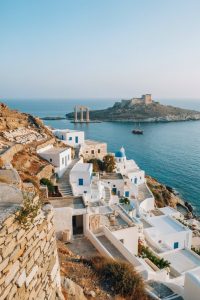
📍 Location: Aegean Sea, Cyclades Islands | Population: 19,000 | Vibe: Pastoral Marble, Broken Temple Nostalgia, Gastronomic Abundance
✨ My Most Unforgettable Moment:
At Filoi Taverna in Naxos Chora, the island’s famous ‘local feta’ salad – selected tomatoes, onion, olive. Feta itself, an art emerging from the island’s soil. Grilled lamb chops (kokoretsi), medium-rare cooked, fresh oregano and olive oil – the meat so tender my teeth weren’t needed. Most importantly, the island’s own cheesemakers’ ‘graviera’ (hard and sweet, the island’s architect signature) – that cheese’s crystalline salt and 6-month aged flavor brought Naxos’s soil directly to my palate. Meal finished, the waiter suggested wine – local Naxos production – first red (Mavroudi), then white. Each sip opened another soul-layer of the island, as if Apollo’s broken gate slowly repaired itself on my palate.
10. Patmos – Saint John’s Island of Visions
I found Patmos ‘Greece’s most Middle Eastern and spiritual’ island – this is truth not just geographically, but atmospherically. Chora town’s Saint John’s Monastery (established 1088), Byzantine architecture’s insecure design, dominates from a high hilltop – this is where Saint John’s last writings, Revelations’ text, was written in Patmos Cave below. Narrow streets, white and blue buildings, beautiful beaches – the entire island’s fundamental stance is built on ‘peace and meditation.’ Patmos, remaining outside tourism, protects its soul. Here, time flows at another speed – and silence is the highest sound.
I took a ferry from Rhodes (3 hours) and stayed at Patmos Island Residence in Chora (4-star boutique). From the balcony, the Aegean Sea’s inland view appeared – nighttime electric lights, as if stars reflected in sea. Visiting Saint John’s Monastery self-guided – ancient manuscripts in display cases, handwriting so delicate I felt like removing my shoes. Illuminated Manuscript Collection – from the 11th century onward, colors never faded, faithful people’s signatures – time seemed not to have passed. Especially Revelations’ paintings, ‘Christ and the Seven Churches’ Angels,’ so detailed and color-rich that 14th-century painters must have worked in high prayer state. At Skala Harbor, morning swimming (cold but cleansing), Apocalypse Curve climb, Grikos Beach sea immersion – every dive was worship.
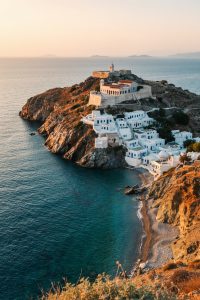
📍 Location: Aegean Sea, Dodecanese Islands | Population: 3,000 | Vibe: Sacred Scripture Island, Spiritual Silence, Saint John’s Visions
✨ My Most Unforgettable Moment:
At Benetos Restaurant at Skala Harbor’s corner – the island’s local fishing boats brought morning’s ‘gavros psito’ (small grilled sardine). Salty, oily, sea-devoted fish. The island’s own olive oil (green and slightly bitter), fresh dill from mountains behind the monastery – each component, part of Patmos’s spiritual diet. ‘Revithokeftedes’ (chickpea cakes, crushed in stone grinder, sweet and dry) together. That dill aroma’s freshness and sea salt’s briskness, I fully felt Patmos’s soul on my palate – and I understood I wasn’t alone. Monks in the monastery, during my eating, perhaps during prayer, felt that moment I shared with food. Soul and food, in Patmos, speak the same language.
Conclusion: Greece Calls Me, Every Day, Every Hour
Dear travelers, Greece isn’t just a destination – it’s a life language, a spiritual state, a home feeling. I believe during my previous visits, not just places remained; emotional pieces stayed – as if leaving a map of myself with each departure. With the desire to return each island, each corner, each ancient stone one more time, I carry a piece of Aegean sun in my pocket, a handful of sea salt, and these stories live in me. From luxury hotel awakenings to simple yet meaningful meals at local restaurants – each experience pulls me deeper, brings me closer to that ‘being Greek,’ living contentedly without knowing who you are.
Are you ready for this beautiful journey? Pack a suitcase, pray to Apollo, and answer Greece’s call. Because being there once means being there forever. Greece is calling you. Now it’s your turn – go, swim, eat, and leave your soul in the Aegean.