
My love affair with Japan began exactly twelve years ago. I can still remember the humid, faintly sweet air that hit me the moment I stepped out of Narita Airport — and I’ll admit it, ever since that day I’ve kept coming back to this country the way you keep returning to someone you love. Once, I stayed in a tiny machiya house in Kyoto for a full six weeks; by the end of it, the butcher on the corner was calling me by name! Yes, I’m a bit of a travel snob — I’m not fed by crowded tour buses, but by those small, boutique, historic hotels that make you think ‘this is it’ the moment you step through the door. And, of course, by the kaiseki spread the hotel’s chef prepares with the season’s freshest vegetables. That’s exactly where Japan’s secret lies: that almost obsessive devotion to aesthetics shows up even in the most remote mountain village. In this post, I’ll walk you through the ten places that stole my heart the most — real hotels I stayed in, real flavors I tasted, real moments I lived. Pack your bags. This journey will take you from Tokyo’s skyscrapers all the way to the snow-white roofs of Shirakawa-go!
1.Kyoto
Time seems to flow differently in Kyoto. As evening light dims over Gion’s narrow stone streets, the paper lanterns of the machiya houses flicker on one by one. I feel as if I’ve accidentally slipped onto a page from the past. Walking among the thousands of orange torii gates at Fushimi Inari, the only sounds I hear are the echo of my own footsteps and distant birdsong; the gates seem to catch fire in the first light of morning. In Arashiyama’s bamboo grove, the wind seems to whisper something just for me. Even “postcard-pretty” doesn’t quite do this scenery justice.
I flew into Kansai Airport and took the train straight to Kyoto; this stay lasted a full five nights. I treated myself to Tawaraya Ryokan — right in the heart of the city, in the Nakagyo district, within walking distance of the Kamo River, and carrying a history of over three hundred years. It’s one of Japan’s oldest and most revered ryokans. I still remember the sudden hush that fell over me as I slipped off my shoes at the door. I walked to Fushimi Inari at dawn, got happily lost for hours in the Arashiyama bamboo grove, wandered in the shadow of Nijo Castle, and one evening watched a private maiko performance in Gion — that night I barely spoke, I just watched.
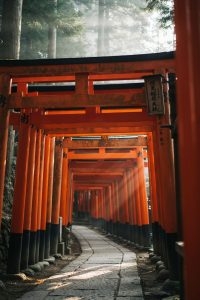
Location: Kansai region, Honshu island | Size: Population of roughly 1.4 million; imperial capital from 794 to 1868 | Vibe: Peaceful, timeless, deeply spiritual
My personal highlights…
- Walking through Fushimi Inari at dawn, when there’s almost no one else around
- The silence of the bamboo grove in Arashiyama
- The kaiseki dinner served in my room at Tawaraya, made with seasonal vegetables and tofu — especially the thinly sliced fresh yuba (tofu skin) and grilled ayu fish, which still visit me in my dreams
2.Tokyo
What struck me most about Tokyo wasn’t the chaos, but the quiet pockets right in the middle of it. Amid Otemachi’s skyscrapers, the greenery of the Imperial Palace Gardens suddenly appears; the distant rustle of leaves seems to drown out the traffic noise behind you. The city seems to hold its breath for a moment. At night, the flood of lights at Shibuya Crossing; by day, the wooden-fronted old shops of Yanaka — I still can’t forget the fresh mochi a shopkeeper handed me with a smile. This city breathes in two different centuries at once.
This time my stay in Tokyo lasted four nights; I made Aman Tokyo, perched at the top of Otemachi Tower and overlooking the Imperial Palace Gardens, my home away from home. I had early breakfasts at Tsukiji Outer Market, drifted among the light installations at teamLab Planets, had an omakase experience in Ginza where the chef’s quiet, economical hands set down still-warm rice in front of me, and spent one afternoon happily lost in the narrow streets of Yanaka.
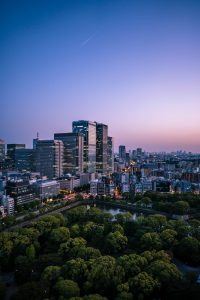
Location: Honshu island, Kanto region | Size: Metropolis of roughly 14 million people | Vibe: Energetic, cosmopolitan, with surprisingly peaceful corners
My personal highlights…
- The evening I spent in Aman Tokyo’s spa, soaking in a traditional furo tub while watching the sky meet the skyline
- The fresh uni (sea urchin) donburi I had at Tsukiji
- The otoro nigiri a chef hand-pressed for me at a tiny sushiya in Ginza, served with still-warm rice — a taste I’ll never forget
3.Hakone
The moment I stepped into Hakone, a sharp smell of sulfur hit my nose and I winced for a second; but seconds later, that smell gave way to Mount Fuji’s magnificent silhouette, and all my discomfort simply melted away. Walking through the wisps of white steam rising from the volcanic valley of Owakudani, their damp warmth on my face, I felt like I’d stepped off the planet entirely. Lake Ashi’s mirror-still waters, with snow-capped Fuji rising behind them, made the whole scene look like it had leapt straight out of a fairy tale.
Staying at Gora Kadan, built on the grounds of a former Imperial family summer villa, was one of the reasons I came to Hakone in the first place. I took the Odakyu Romancecar from Tokyo to Hakone-Yumoto in two hours, then the mountain railway up to Gora; I stayed three nights. I spent hours wandering the Hakone Open-Air Museum, took a boat cruise on Lake Ashi, tasted the famous black eggs at Owakudani, and felt every ounce of tension melt from my shoulders the moment I sank into my room’s private hot-spring stone tub.
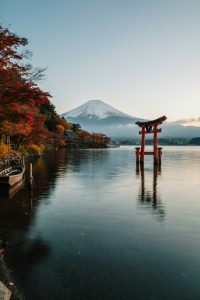
Location: Kanagawa Prefecture, Fuji-Hakone-Izu National Park | Size: A small hot-spring town of roughly 11,000 people | Vibe: Calm, volcanic, restorative
My personal highlights…
- The sight of Mount Fuji suddenly emerging from behind the clouds during my boat trip on Lake Ashi
- The birdsong I heard while drinking my morning tea in Gora Kadan’s private garden
- The kuro-tamago (black eggs) I ate at Owakudani, their shells turned pitch-black by boiling in the sulfurous spring water — local legend says each one adds years to your life, and I ate a full seven
4.Kanazawa
When I discovered Kanazawa, I found a city that isn’t as famous as Kyoto, but that ended up taking up an even bigger place in my heart. Walking through Kenrokuen Garden at dawn, I saw the pine branches supported by ropes for winter (yuki-tsuri) standing like sculptures, and I stopped for a moment just to watch. In the evening light, the red-latticed teahouses of Higashi Chaya turned a warm, honey-colored gold.
I took the Hokuriku Shinkansen from Tokyo, arriving in Kanazawa in two and a half hours, and stayed three nights. I stayed at the historic Kanazawa Chaya, part of the Kagaya Group, within walking distance of Kanazawa Station. I toured Kenrokuen Garden and the adjacent Kanazawa Castle, savored fresh seafood at Omicho Market, held my breath watching an elderly craftsman’s trembling hands stretch gold leaf paper-thin at one of the gold-leaf workshops in Higashi Chaya, and lost all track of time at the 21st Century Museum of Contemporary Art.

Location: Ishikawa Prefecture, Hokuriku region | Size: A city of roughly 450,000, known for its Edo-period architecture | Vibe: Elegant, artistic, like a hidden gem
My personal highlights…
- Kenrokuen Garden blanketed in winter snow
- The afternoon I spent eating gold-leaf-topped ice cream on Higashi Chaya’s stone-paved streets
- A bowl of rice topped with fresh nodoguro (blackthroat seaperch) and sea urchin at a tiny kaisen-don spot in Omicho Market — the freshest seafood dish I’ve ever had
5.Naoshima
As I approached Naoshima by ferry, the moment I spotted that giant yellow pumpkin sculpture rising from the calm waters of the Seto Inland Sea, my hand reached for my phone on pure reflex — a shiver had already run through me. This tiny island is a genuine open-air art museum; Tadao Ando’s architecture, woven from concrete and light, meets the sea’s natural glow to produce a scene that takes your breath away. Wandering Honmura’s narrow streets, discovering that even an abandoned old tobacco shop had been transformed into a work of art left me astonished.
I took the ferry to Naoshima via Okayama and stayed two nights on the island; I chose Benesse House, designed by Tadao Ando, which is both a museum and a hotel. I stood for a long time before James Turrell’s and Claude Monet’s works at the Chichu Art Museum, explored the Art House Project in Honmura step by step, paused in front of the famous Kusama pumpkin to take in the island, and walking alone through the museum’s corridors late at night, I felt as though, just for that night, the whole museum belonged to me.
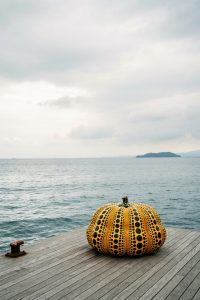
Location: Kagawa Prefecture, Seto Inland Sea | Size: A tiny island of roughly 3,000 people, covering about 8 square kilometers | Vibe: Minimalist, meditative, steeped in art
My personal highlights…
- Watching Monet’s water lily series under natural light at the Chichu Art Museum
- The quiet moment I spent in front of Kusama’s red pumpkin, gazing at the pier on the far side of the island
- A simple yet perfect Seto Inland Sea set menu at Benesse House’s restaurant, made with fish caught in the waters around the island — simplicity turned into a true art form here
6.Takayama
They really aren’t exaggerating when they call Takayama “the little Kyoto of the Alps.” Walking among Sanmachi Suji’s dark wooden merchant houses, with sakabayashi cedar balls hanging from the eaves and the sound of water running through the canals, I felt like I’d stepped straight into a film set in the Edo period. Wandering the riverside market along the Miyagawa early one morning, with the mountains still wrapped in fog and that damp, cold air raising goosebumps on my skin, the whole scene took on a dreamlike quality.
I took the train from Nagoya, reaching Takayama in two and a half hours, and stayed two nights. I stayed at the historic Honjin Hiranoya Kachoan, just ninety seconds on foot from Sanmachi Suji; the scent of wood and incense that greeted me the moment I stepped through the door was a warm welcome in itself. I wandered the Miyagawa Morning Market, sampled sake at the breweries along Sanmachi Suji, toured the Hida no Sato open-air folk village, and savored, at length, the Hida-beef kaiseki dinner served at my ryokan that evening, the meat practically melting in my mouth.
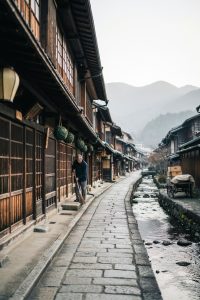
Location: Gifu Prefecture, Hida region, Japanese Alps | Size: Roughly 85,000 people, though the largest municipality in Japan by area | Vibe: Nostalgic, mountainous, a gastronomic paradise
My personal highlights…
- The morning I spent chatting with local farmers at the Miyagawa Market
- The way Sanmachi Suji’s wooden facades looked in the morning mist
- The A5-grade Hida beef, lightly seared and served at the heart of the kaiseki spread at Honjin Hiranoya Kachoan — it practically melted in my mouth and remains the most tender piece of meat I’ve ever tasted
7.Shirakawa-go
The moment I arrived in Shirakawa-go, I felt as though I’d stepped straight out of a children’s storybook and into a village. Ogimachi’s gassho-zukuri houses, their steep roofs shaped like hands folded in prayer, seemed to float in the middle of lush green rice paddies. Looking down over the village from the Shiroyama viewpoint, there wasn’t a single sound around me apart from birdsong; I understood, with tears in my eyes, exactly why this place made it onto the UNESCO World Heritage list.
I took a bus from Takayama, arriving in Shirakawa-go in fifty minutes, and stayed one night — I couldn’t help but wish I could have stayed just one more. I stayed at the four-star Shiroyamakan, with river views and traditional Japanese rooms. I walked up to the Shiroyama viewpoint, toured the Gassho-zukuri Minkaen open-air museum, took a walk along the paths between the rice paddies, and in the evening knelt by the irori hearth, filled with the smell of woodsmoke, to a meal laid with local mountain vegetables.

Location: Gifu Prefecture, Shogawa Valley | Size: A tiny village of roughly 1,600 people, home to more than 100 gassho-zukuri houses | Vibe: Storybook, isolated, frozen in time
My personal highlights…
- Watching the village bathed in golden-hour light from the Shiroyama viewpoint
- The warm greetings of local farmers I passed while walking through the rice paddies
- The dinner served by the irori hearth at my ryokan, with fresh mountain mushrooms and hoba miso (miso grilled on a magnolia leaf) — that smoky, earthy flavor is still on my palate
8.Miyajima
As I approached Miyajima by ferry, the moment I saw Itsukushima Shrine’s vermillion torii gate seemingly floating in the middle of the sea, my breath caught and I just stood there staring for a long while. Listening to the waves lapping at the torii’s feet, I realized that when the tide is in, the gate hangs suspended over the water, and when it’s out, you can walk right up to it — each version carries its own magic. With deer wandering freely and grazing right in front of the shrine, I couldn’t quite decide for a moment whether the scene was real or a dream.
I reached Miyajima from Hiroshima by tram and ferry in a total of forty-five minutes, and I could only manage one night — one night truly isn’t enough on this island. I stayed at Iwaso Ryokan, built in 1893 and holding the title of the island’s first ryokan, tucked into the Momijidani forest; being part of a legacy well over a hundred and thirty years old gives you an odd sense of pride. I toured Itsukushima Shrine while the tide was out, rode the ropeway up Mount Misen, smiled as a deer bowed politely in front of me, and in the evening savored a kaiseki spread full of local seafood served in my room.
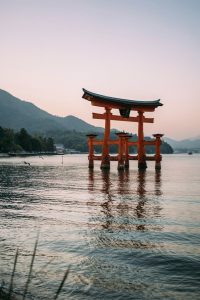
Location: Hiroshima Prefecture, Seto Inland Sea | Size: An island of roughly 30 square kilometers, with about 1,500 permanent residents | Vibe: Sacred, natural, deeply peaceful
My personal highlights…
- Walking right up to the torii gate on foot once the tide goes out
- Watching the Seto Inland Sea from the summit of Mount Misen
- The lightly grilled Miyajima oyster I had at Iwaso Ryokan’s restaurant — impressively sweet and creamy, thanks to the island’s cold, nutrient-rich waters
9.Nara
The moment I set foot in Nara, I found myself in the middle of a park where hundreds of deer roam freely. Todaiji Temple’s massive wooden structure and the Great Buddha inside it, standing over fifteen meters tall, made me feel truly tiny, while Kasuga Taisha’s moss-covered stone-lantern-lined paths seemed wrapped in an almost magical silence. Every worn patch on this city’s stone-paved streets seemed to still whisper the gravity of being one of Japan’s oldest capitals.
I took the train from Kyoto, reaching Nara in forty-five minutes, and stayed two nights. I stayed at Nara Hotel, right at the edge of Nara Park, founded in 1909 and considered the region’s most classic hotel; walking its century-old corridors, I felt an odd little shiver. I fed the deer in Nara Park special crackers — one bowed politely as if to thank me, and I couldn’t help but laugh — visited the Great Buddha at Todaiji Temple, walked Kasuga Taisha’s paths lined with thousands of lanterns, and spent hours wandering aimlessly through Naramachi’s old merchant quarter.
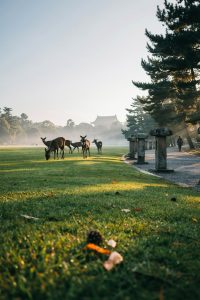
Location: Kansai region, Nara Prefecture | Size: A city of roughly 350,000, with Nara Park covering 660 hectares | Vibe: Historic, peaceful, faintly magical
My personal highlights…
- Visiting the Great Buddha early in the morning, before the crowds arrive
- Walking Kasuga Taisha’s forested, lantern-lined paths
- The kakinoha-zushi I bought from a small shop in Naramachi — lightly salted salmon and mackerel wrapped in a fragrant persimmon leaf, this traditional sushi sums up Nara’s thousand-year culinary heritage in a single bite
10.Okinawa
The moment I landed in Okinawa, along with the tropical breeze that greeted me and the humid warmth filling my lungs, I found myself in a culture entirely different from the rest of Japan. Onna Beach’s turquoise waters, the dazzling clarity of the Blue Cave at Cape Maeda in the daylight, and the main hall of Shurijo Castle, reborn in vermillion lacquer with its scaffolding finally removed, captivated me. Witnessing the castle’s reconstruction felt like watching a place rise from its own ashes; this island offered me both a tropical paradise and traces of the ancient Ryukyu Kingdom, all at once.
I landed at Naha Airport, drove forty minutes in my rental car to Onna village, and stayed four nights. I stayed at Halekulani Okinawa, within walking distance of Inbu Beach. All my fatigue melted away the moment I dove into the cool waters of the Blue Cave at Cape Maeda; I watched the restoration work up close at Shurijo Castle Park, had a long conversation with a textile craftsman on Kokusai Street, and spent one afternoon soaking up the sun on the hotel’s private beach.
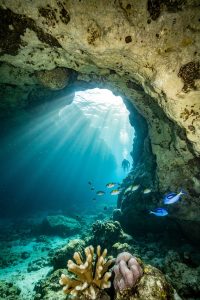
Location: Okinawa Main Island, Ryukyu Islands | Size: Main island population of roughly 1.1 million | Vibe: Tropical, laid-back, culturally one-of-a-kind
My personal highlights…
- The colorful coral reefs I saw while snorkeling in the Blue Cave at Cape Maeda
- A handmade bingata-dyed scarf I found on Kokusai Street — made using the island’s traditional dyeing technique, with vivid orange and blue patterns, it became the most special souvenir in my suitcase
- The rafute I tasted at Halekulani’s restaurant — pork belly braised for hours until meltingly tender, caramelized with awamori and brown sugar, the moment Okinawan cuisine truly won me over