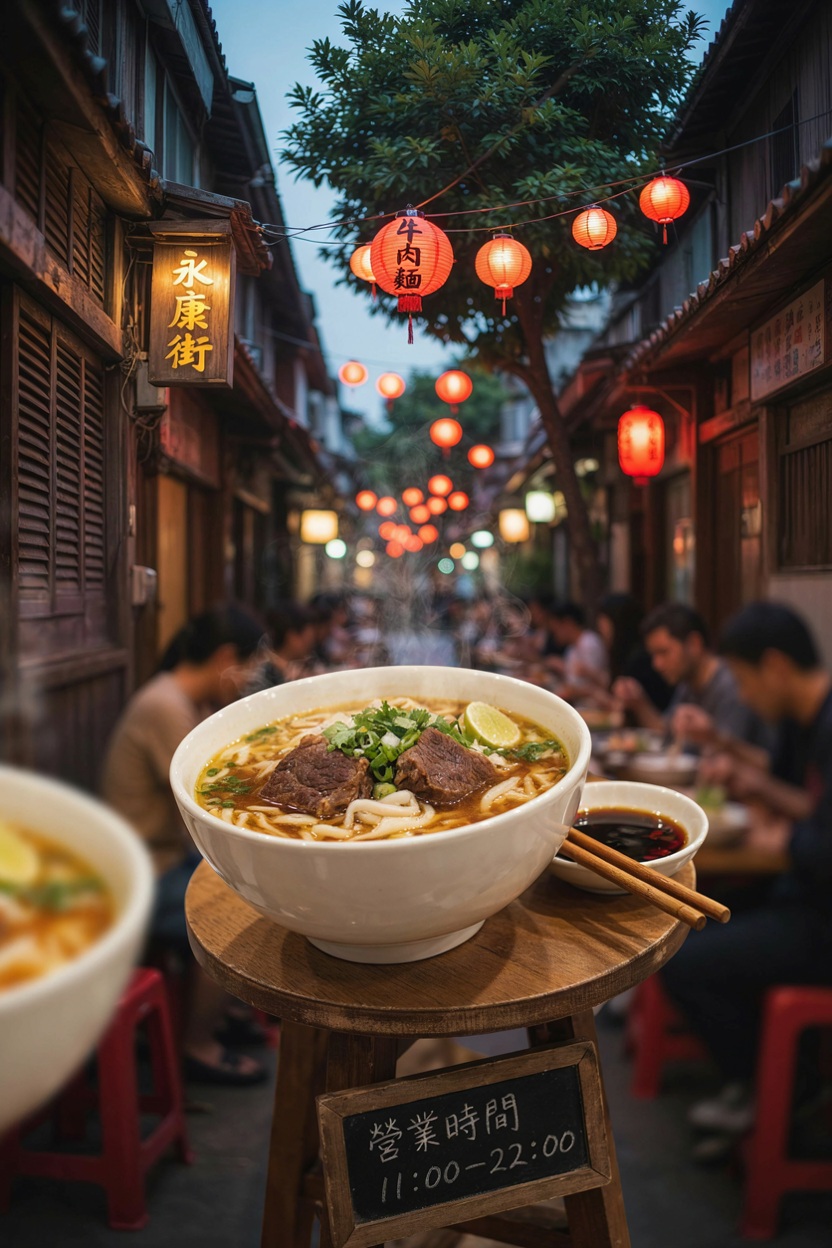
The moment the plane door opened, Taipei swallowed me whole.
Warm, tropical humidity hit my face. The smell of asphalt after rain, star anise drifting from the back lanes… I’d fallen for this city before I’d even grabbed my suitcase.
Since that day I’ve come back seven times in five years. “I once lived here” wouldn’t be a lie.
I’ve long stopped counting how many times I’ve queued at the same noodle stall on Yongkang Street — the auntie behind the counter now waves me in like an old regular — or how many evenings I’ve let slip away on a teahouse balcony in Dihua.
At first glance Taipei can look grey, quiet, unassuming. But if you’re a traveller in love with texture, aesthetics and real flavour, this city unfolds in your palm like a slow, patient origami.
This piece is for you: my aesthetic-obsessed kindred spirits, the ones who chase a place’s soul over its show, who notice even the tiny pattern on the rim of a teacup.
Here are the 10 Taipei moments I fell hardest for, gathered drop by drop over four days. Ready? Let’s get lost together.
Taipei 101 & Xinyi: An Evening on the Edge of the Clouds
My first day always begins in Xinyi.
Because I’ve learned that the real way to feel Taipei 101 isn’t to look down from it — it’s to climb the hill across the valley and see it whole.
I settled onto the giant boulders of Elephant Mountain (Xiangshan), my legs still humming from the climb. Slowly, the tower lit up from within against the first blush of evening.
That emerald, bamboo-segmented silhouette caught fire in the amber sunset bouncing off the surrounding glass towers — and my hand forgot to reach for the camera. Postcard-perfect doesn’t even cover it.
That night I stayed at the glass-fronted, design-forward W Taipei (Songshou Road) — a lively base within walking distance of 101.
In the morning I rode to Xiangshan station and made the short, steep, generous 20-minute hike to the top. Then up to the observation deck, where one of the world’s fastest elevators whisked me into the clouds in seconds.
I closed the day drifting from window to window along Xinyi’s glittering pedestrian lanes.

Location: Xinyi District, Taipei | Size: 508 metres, 101 floors | Vibe: Grand, modern, glittering
My personal highlights…
- When Din Tai Fung’s steaming xiaolongbao landed in front of me I still couldn’t quite believe it: paper-thin skin folded exactly 18 times, minced pork and a pool of scalding broth hidden inside. One bite with ginger and black vinegar, that delicate soup bursting on my tongue — and I remembered, all over again, why I keep coming back.
Yongkang Street: The City’s Tastiest Tree-Lined Lane
I never knew a street could feel this much like home — until Yongkang.
In this tree-lined lane of Da’an, dotted with boutiques and hidden cafés, every corner is a new smell, a new plate: sizzling garlic here, sweet brewing tea there.
Walking in the shade of Japanese-era wooden houses, I felt less like a tourist and more like a neighbour’s guest.
I always explore this area from a base near Dongmen station, close to the leafy Daan Forest Park.
One noon I joined the queue — a little ritual in itself — at the legendary Yongkang Beef Noodle (Lane 31, Section 2, Jinshan South Road). Then I cooled off across from a mountain of mango shaved ice at Smoothie House.
I ended the day with a hand-poured coffee in the artist cafés of Qingtian Street, reborn from old Japanese civil-servant dormitories.
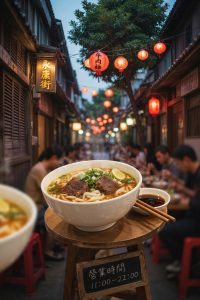
Location: Da’an District, next to Dongmen MRT | Size: ≈ 1 km gourmet corridor | Vibe: Nostalgic, intimate, mouth-watering
My personal highlights…
- Yongkang Beef Noodle’s dark amber broth simmers for a full 48 hours with beef bones and star anise. The shank fell apart at the touch of my chopsticks, and the pickled mustard greens on top added that sharp, bright edge — I closed my eyes at the very first spoonful. A bowl of mango ice alongside: the exact taste of a Taipei summer.
Dadaocheng & Dihua Street: Where Old Taipei Beats
Dihua Street is my secret love.
The city’s oldest street — from the 1850s — is also its most soulful: Baroque-fronted merchant mansions, century-old herb shops, sacks upon sacks of oolong, bolts of fabric stacked to the ceiling.
When the afternoon sun licked those old façades, the street turned into an open-air museum. Right there, in that light, I was spellbound.
This time, to soak up the old-town spirit, I spent a night at OrigInn Space, a boutique stay inside a historic building at the southern end of Dihua — from its tiny ground-floor café to its rooms, every corner a retro fairy tale (and yes, the wooden floors creak just enough).
The next day I sank into the roasted aroma of tie guan yin at Sin Hong Choon, a teahouse open since 1930. At the famous Xiahai City God Temple, I lit incense to the god of love.
I closed the evening at the container bars of Dadaocheng Wharf, glass in hand, the Tamsui River turning copper at sunset.
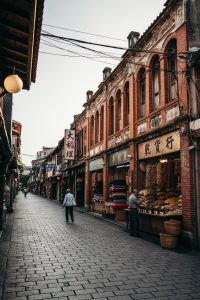
Location: Datong District (Dadaocheng), Taipei | Size: Taipei’s oldest street, 1850s | Vibe: Nostalgic, artistic, timeless
My personal highlights…
- At Ningxia Night Market just north of the street, an oyster omelette (o-a-tsian): fresh oysters in a jelly-soft, faintly crisp sweet-potato-starch batter, folded with egg and greens under a sweet-savoury red sauce. Steaming plate in my hands, under the red lanterns — suddenly I’d slipped straight into a local’s evening ritual.
Bangka & Longshan Temple: The City’s First Breath
In Wanhua — old Bangka — time slows down.
Taipei’s oldest neighbourhood is also its most heartfelt: at the 1738 Longshan Temple, incense smoke curls through the lanterns and the murmur of praying elders flows like a waterfall.
Gilded roof ornaments, dragon carvings, a little waterfall in the courtyard… In the middle of the crowd, I found a peace I hadn’t expected.
To explore the neighbourhood I stayed at Wanhua’s boutique Monka Hotel, right in the heart between Longshan and Ximen.
In the morning I watched the prayer fires at the temple. Then I framed the Qing-dynasty brick arches of the restored Bopiliao Historic Block.
After that I lost myself in “Herb Alley,” among century-old scents of cinnamon and ginger.

Location: Wanhua (Bangka) District, Taipei | Size: Longshan Temple founded 1738 | Vibe: Spiritual, authentic, deep-rooted
My personal highlights…
- At a humble stall, lu rou fan: tiny cubes of fatty pork braised for hours in a dark, sweet-savoury sauce, melting over steaming rice. A cooling bowl of aiyu jelly with lemon syrup on the side. Simple — but with Longshan’s incense still clinging to me, that plate showed me the city’s most honest face.
Ximending: The Pulse of Neon and Youth
Ximending wakes the teenager in me with every step.
This is Taipei’s Harajuku: neon signs, street performers, boutique fashion, a crackling young energy — and the thrum of a busker’s amp somewhere in the mix.
After dark the lights spill across the wet pavement and every corner becomes a stage. My favourite detail, though, stands firm in the middle of the modern chaos: the octagonal red-brick Ximen Red House, from 1908.
I stayed nearby at Inhouse Hotel (Xining South Road), a design-filled base within walking distance of Ximen MRT.
One afternoon I browsed the independent designer shops inside the Red House. Then I wandered the pedestrian zone with no plan at all, following the buskers.
And then I happily joined that long line for a legendary snack.

Location: Wanhua District, Ximen MRT | Size: Red House built 1908 | Vibe: Young, electric, neon-bright
My personal highlights…
- Ay-Chung Flour-Rice Noodle’s stand-up bowl: a dark, creamy thin rice-noodle (mianxian) soup in bonito broth, tender braised pork intestine inside, topped with garlic, cilantro, a splash of black vinegar and chilli. Standing in the thick of the crowd, hot bowl cupped in my hands, Ximending’s rhythm hit me right on the tongue.
National Palace Museum & Shilin: Treasures and Night Lights
Stepping into the museum, a shiver ran through me.
One of the world’s largest collections of Chinese art — nearly 700,000 pieces — was hidden right here, in the green hills of Shilin.
I couldn’t tear my eyes from the famous jadeite “Cabbage” and the “Meat-Shaped Stone.” Every case, a tiny slice of millennia-old grace.
That night I stayed at Taipei’s most iconic, historic hotel — the grand red Grand Hotel (Yuanshan) — an experience in itself, with its vast Chinese-palace architecture, golden pillars and legendary roof. Sleeping there felt like a night inside an imperial court.
By day I paced three floors of the museum. Then, right next door at Silks Palace, I tasted dishes inspired by the museum’s very treasures.
And I gave the evening over to the sweet roar of Shilin, one of the city’s biggest night markets.
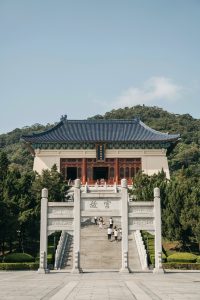
Location: Shilin District, Taipei | Size: ≈ 700,000 artifacts | Vibe: Grand, cultural, timeless
My personal highlights…
- At Silks Palace a glossy, Dongpo-style pork belly arrived, mimicking the museum’s “Meat-Shaped Stone”: steamed for hours with soy, rice wine and spices, gelatinous and butter-soft. Then, out in Shilin, a giant crispy chicken cutlet and a tornado potato on my feet. High art and street food in a single day — how very Taipei!
Beitou Hot Springs: A Pause in the Sulphur Steam
The day I discovered Beitou, I learned that a whole Japanese onsen town hides just half an hour from downtown.
Steaming sulphur valleys, Japanese-era wooden buildings, historic hot-spring hotels lined along the creek… I stood transfixed before the misty Thermal Valley and the wooden Beitou Library, counted among the world’s most beautiful.
This is a pocket of steamy stillness, stolen from the city.
I got off at Xinbeitou station and settled into the luxe Wellspring by Silks Beitou, opened in 2025 — my own private white-sulphur pool in the room, and downstairs a main bathhouse with Japanese-certified onsen guides. The scent of warm cedar met me at the door.
First I visited the Beitou Hot Spring Museum, built in 1913 as the largest public bathhouse in East Asia. Then I walked the edge of the steaming Thermal Valley, warm vapour brushing my skin.
I spent the evening sunk in hot water, watching the forest through the glass.

Location: Beitou District, Xinbeitou MRT | Size: Hot Spring Museum from 1913 | Vibe: Serene, steamy, healing
My personal highlights…
- Sunk in that milky white-sulphur water in my room, gazing at the green forest, the whole day’s tiredness melted away. The next morning, a traditional Taiwanese breakfast: steaming rice congee, grilled fish, fermented tofu, pickles, and that famous “thousand-year egg.” After the hot spring, that warm bowl — pure, unhurried peace.
Liberty Square & the CKS Memorial: The Architecture of Grace
My first step onto Liberty Square, I fell silent before the symmetry of white marble and deep-blue roofs.
On one side the Chiang Kai-shek Memorial Hall; facing it, the twin traditional palace roofs of the National Theater and Concert Hall.
The moment white stone meets blue sky is a painting in itself. And the flawless choreography of the changing of the guard is quietly hypnotic.
That day I stayed at Cosmos Hotel Taipei, near Taipei Main Station — central and calm.
In the morning I watched the changing of the guard (it happens on the hour — don’t miss it), the crack of the rifles and the perfect unison of their steps. Then I dropped into the museum beneath the hall.
After that I passed under that enormous arched gate and spilled out into the city.

Location: Zhongzheng District, CKS Memorial Hall MRT | Size: Square ≈ 240,000 m² | Vibe: Monumental, elegant, serene
My personal highlights…
- Early morning, queuing at the legendary Fuhang Soy Milk inside the historic Huashan Market building: fresh-baked, crisp-layered shaobing wrapped around a crunchy youtiao and egg, with a dark, faintly sweet warm soy milk. Eating that simple, perfect breakfast, I woke into the day like a true local.
Jiufen: The Fairy-Tale Town Where Spirits Roam
Arriving in Jiufen, I truly felt I’d tumbled into a fairy tale.
Narrow stepped alleys clinging to the mountainside, red lanterns stacked one above the other, the fogged windows of teahouses, and the Pacific stretching out below — and the tap of rain on tin roofs, a sound as iconic as the place itself.
When the mist rolls in and the lanterns glow, that Japanese-era wooden architecture takes on an air where even “storybook-pretty” falls short.
(It’s said to have inspired Hayao Miyazaki’s Spirited Away; the director never confirmed it — but standing before the Amei Teahouse, you can’t help feeling you’ve walked into the film!)
To linger under the lanterns after the crowds thinned, I spent a night in a small hillside minsu (family guesthouse) just above Shuqi Road.
By day I tasted my way down Jishan Street; in the late afternoon I brewed tea on the balcony of the Amei Teahouse, facing Keelung Islet and the sea.
The next morning I walked the streets again before the crowds returned — just to catch that quiet magic once more.

Location: Ruifang District, New Taipei (~1 hr from Taipei) | Size: A tiny mining town on a mountainside | Vibe: Magical, misty, fairy-tale
My personal highlights…
- Handmade taro balls from the stalls of A Gan Yi and Grandma Lai’s: taro, purple and yellow sweet potato, matcha — chewy little spheres in a warm, faintly gingered sweet syrup with red and green beans. And that legendary peanut ice-cream roll: shaved peanut brittle, taro and pineapple ice cream, a pinch of cilantro, all wrapped in a thin crepe. On Amei’s balcony, facing the sea, tea in hand — that was the moment I’ll remember all my life.
Maokong: Tea Gardens Above the Clouds
I always end my last day in Maokong, up in the hills where the tea is born.
Just a single cable-car ride from the city’s noise lies another world entirely, draped in misty tea gardens.
As the gondola from Taipei Zoo climbed slowly, the green valleys and tea terraces sliding beneath my feet turned into a painting. Looking down through the glass, I felt my shoulders drop and all the city’s rush fall away.
I spent this last day going back and forth from my Taipei base; in Maokong I embraced not the night but the late afternoon.
I rode the gondola to the top, walked the paths between the tea fields — the scent of wet earth and leaf rising around me — and settled at Yao Yue Teahouse, one of the hill’s finest viewpoints.
As the sun set I watched the city lights flicker on one by one. Sipping Muzha’s famous tie guan yin oolong gong-fu style, from tiny cups — the most elegant way I know to close a trip.

Location: Wenshan District (Maokong), reached by gondola | Size: Muzha tea hills, ~300 m elevation | Vibe: Calm, misty, peaceful
My personal highlights…
- At Yao Yue, at a wooden table facing the city lights, the roasted tie guan yin I brewed had a creamy, faintly woody depth… Alongside, dishes made with the tea leaves themselves: tea-oil noodles, tea-smoked chicken, fried tea leaves. And through the steam rising from my cup, seeing Taipei 101 in the distance again — the very silhouette I met on day one — it felt like the perfect, circular finale to four days. That, right there, is why I always come back.
My 4-Day Plan at a Glance
- Day 1 · Modern Taipei — Elephant Mountain & Taipei 101 → Xinyi → Yongkang Street in the evening
- Day 2 · Old Taipei — Dadaocheng & Dihua → Bangka & Longshan → Ximending in the evening
- Day 3 · Culture & Healing — Liberty Square → National Palace Museum & Shilin → Beitou at night
- Day 4 · Fairy Tale & Tea — Jiufen (day into evening) → Maokong tea hills on the way back
Taipei is one of those rare cities that looks unassuming at first glance but whispers a new secret in every layer.
If you care about aesthetics, texture and real flavour — trust me — you won’t come just once.
I’m still dreaming of that noodle stall, that teahouse balcony, that sulphur steam, and I keep going back. Maybe next time, our paths will cross there. 🌏