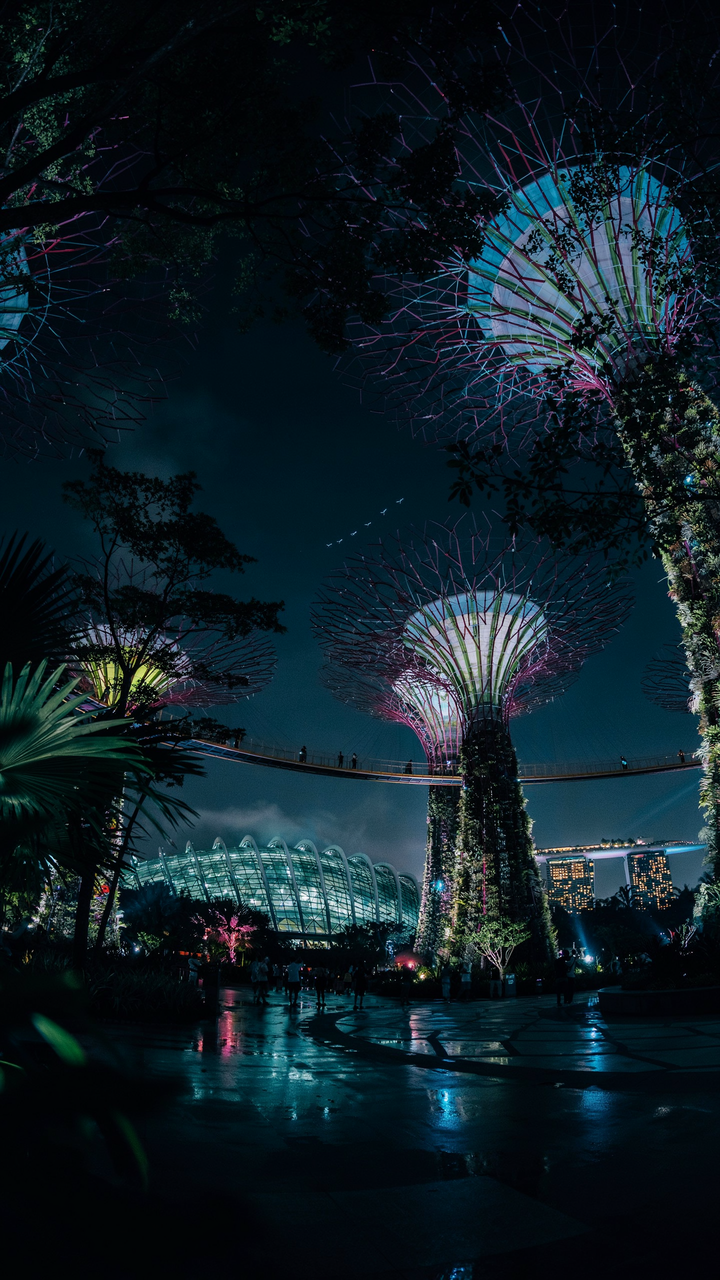
A Breathtaking Guide to the Lion City — One I’m Completely In Love With!!! On My Love for Singapore
The first time I went to Singapore, I was 28 years old. That city changed me — it didn’t just impress me, it changed me. First my perspective changed: I saw there that a city could be so many things at once, that the line between forest and concrete could be erased so gracefully. Then my standards changed. Because of this, I’ve been traveling the world for over a decade; I know Tokyo’s politeness, New York’s madness, Paris’s magic. But Singapore does something else: it hides chaos within order, weaves the forest together with buildings, puts the cuisine of five continents on a single tray. I’ve come eight times. All eight times, my eyes welled up as I boarded the plane.
I wrote this guide for you. For travel “snobs.” For travelers who can tell the difference between beauty, authenticity, and a good story. Here are those places:
1.Marina Bay Sands
Marina Bay Sands catches you off guard — right at the moment you feel ready. You’ve probably seen the photo countless times: that pool suspended 200 meters up, resting on the backs of three towers. But standing there and looking at it in person is something else entirely. The bay turns to gold at dusk. Lights come on one by one inside the towers. And you just watch — there’s nothing else you’re capable of doing.
Thirty minutes after boarding the MRT from Changi, I’m at the door. Three nights in Tower 3 — the only right choice for seeing the city from its widest angle. During the day I got lost in the digital art exhibition at the ArtScience Museum, wandered around the casino floor, walked along the water canal at The Shoppes. But the real moment came while swimming in the infinity pool at sunset. I didn’t mind the crowd — because in that moment, I truly felt like no one else existed. The water stayed still. So did I.
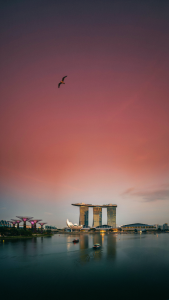
Location: Downtown Core, Central Region | Size: Integrated resort spanning 15.5 hectares | Feel: Futuristic, Majestic, Breathtaking
My personal notes…
“A Lychee Martini at CÉ LA VI on the 57th floor — a city glowing with neon lights below me, an ice-cold glass in my hand. Then black pepper chilli crab at Rasapura Masters. Everything that happened between these two moments was filled with that indescribable feeling that makes Singapore, Singapore. Words fall short — but once you’ve felt it, you never forget it.”
2.Gardens by the Bay
Standing at the base of a 50-meter tree is when you first realize how small you are. The Supertrees — some draped in living ferns and bromeliads, some flickering in shimmering colors during the nightly Garden Rhapsody show — feel like they’re breathing, despite being man-made. Walking through the entrance to Cloud Forest, the cool, humid air that fills you, the sound of the 35-meter waterfall… Right in the heart of the city, you shift into the atmosphere of another planet.
I stayed two nights at the Fullerton Bay Hotel — morning coffee, a view of the bay, that silence before the day begins. I wandered for hours in the Flower Dome, crossed the bridges among the Supertrees on the OCBC Skyway, photographed the lotus pond in the Heritage Garden. But what I was waiting for most was Garden Rhapsody. It starts at 19:45. Get there early. Grab a Nanyang coffee from a hawker stall. Save your spot. Put your phone in your pocket.
Location: Marina South, Central Singapore | Size: 101 hectares of reclaimed land | Feel: Futuristic, Lush, Otherworldly
My personal notes…
“The trees shimmered in colors. The coffee in my hand went cold. There were people around, but they made no sound. In that silence, I thought this: after traveling the world this much, there are still places that can silence you. Garden Rhapsody is one of those things. I still remember the thick texture of the Nanyang coffee, that unique taste distilled through a sock filter.”
3.Chinatown
When I decided to head to Chinatown that first morning, the pull wasn’t in the guidebooks, it was in my feet. As I turned the corner at Tanjong Pagar, the sky was red — the red of lanterns. Hundreds of them, maybe thousands, hanging over cobalt blue and terracotta-red Peranakan facades, drawing in the morning light. The scent of incense and freshly spiced broth mixed together. I never forgot that corner.
I stayed two nights at Wanderlust Hotel — every room in the Art Deco building has its own character. I sat quietly at the Buddha Tooth Relic Temple. I cried a little at the Chinatown Heritage Centre. Because there I saw Singapore’s impoverished immigrant past, those cramped wooden shophouse lives, and the distance from there to today; coming this far in this short a time is moving. I took a guided street tour on Smith Street, had a cheongsam tailored on Pagoda Street. I saw how Keong Saik transforms at night, how the music rises in the bars.
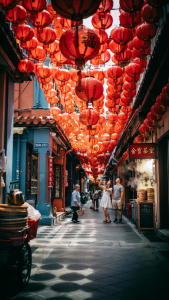
Location: Outram, Central Region | Size: A neighborhood within a 5 km² area | Feel: Vibrant, Historic, Flavorful
My personal notes…
“I got in line at Hawker Chan — for the world’s cheapest Michelin-starred dish. Char siu: honey-glazed, mahogany-red, tender to the bone. Wonton noodles on the side. Less than five dollars. That dish reminded me why traveling still feels miraculous: how, as a stranger, it can still make you feel like you belong.”
4.Little India
The moment you step into Little India, every receptor in your body opens up. Your eyes: daffodil yellow, deep magenta, pomegranate red. Your nose: jasmine garlands, curry leaves, incense. Your ears: street noise, temple bells, Bollywood music coming from somewhere. The colorful gopuram of the Sri Veeramakaliamman Temple stands against the blue sky in such a way that I didn’t raise my camera — I just looked. For a long time. Sometimes, to understand a place, all you need to do is close your eyes and let it fill you up.
One night at Albert Court Village Hotel — a courtyard garden, Peranakan touches, everything in its right place. I spent the morning at a flower-garland-weaving workshop on Campbell Lane. The afternoon at the Indian Heritage Centre. In the evening, my hands were buried in flour at a roti prata workshop, watching in amazement as the dough was stretched paper-thin. I went into Mustafa Centre at midnight — because it’s open 24 hours, and places like that have a different rhythm at night.
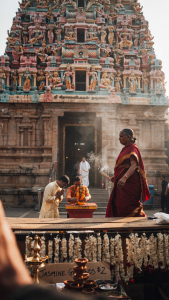
Location: Rochor, Central Region | Size: Dense urban neighborhood, ~1.5 km² | Feel: Aromatic, Colorful, Spiritual
My personal notes…
“I sat on the floor of a banana-leaf restaurant on Race Course Road. Fish head curry arrived — turmeric yellow, tangy with tamarind, chunks of sea bass. I ate with my fingers. There weren’t any utensils on the table anyway. Eating that dish is the one key to understanding Little India.”
5.Clarke Quay and Boat Quay
Some places speak differently by day than by night. Clarke Quay is one of those places. Sitting quietly in the afternoon in front of the old Victorian godowns, their walls painted sorbet pink and lime green, I thought about how calm a city could actually be. Then the sun set. The lamps came on. The music started. The crowd flowed in. Bass guitar leaked out of one bar’s door; electro out of another. Same street, an entirely different character.
Two nights at Hotel Fort Canning — an 1926 building, right inside Fort Canning Park, history everywhere. At sunset I took a bumboat tour along the Singapore River, ate at the historic quay of Boat Quay, walked through the Fort Canning archaeological dig site. In the evenings I strolled along the illuminated quay, going from bar to bar. A different world spilled out of every doorway.
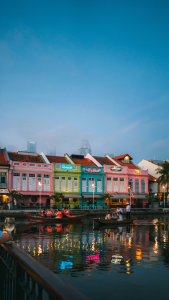
Location: Singapore River, Central Region | Size: Riverside area, ~1 km | Feel: Vibrant, Romantic, Colorful
6.Sentosa Island
It’s easy to underestimate Sentosa. You could call it a “theme park island” and you’d be more or less right — there’s Universal Studios, a giant aquarium, hotel after hotel. But if I took you to Siloso Beach very early in the morning, before the crowds arrive, and showed you how the shoreline burns with coral and gold light — you’d redefine Sentosa. Same goes for when you run into long-tailed macaques on the Imbiah forest trail.
I stayed two nights at Capella Singapore — a place converted from a colonial-era barracks, where you can breathe amid 30 acres of gardens. I had a blast at Universal Studios like a kid — I admit I screamed on the Transformers ride. I snorkeled at Palawan Beach, played a round at the golf course. At sunset I crossed over to Sentosa from Harbourfront by cable car; the city grew smaller and smaller, the island grew bigger. Seeing Singapore this way is something else entirely.
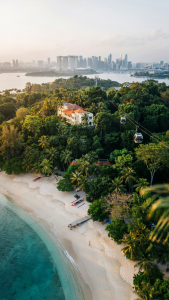
Location: Southern Singapore, 0.5 km offshore | Size: 5 km² | Feel: Festive, Tropical, Luxurious
My personal notes…
“Breakfast on The Knolls’ veranda: black truffle Eggs Benedict, a porcelain plate, the call of a hornbill from the forest canopy. The scene felt so cinematic that for a moment I wanted to reach out and check whether the forest was real. It was. But at Capella, everything feels a little like a dream.”
7.Kampong Glam
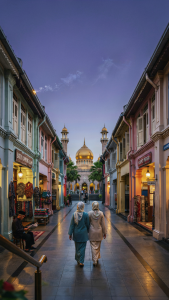
The first time I stepped into Haji Lane, I couldn’t stop smiling. It’s a narrow alley — painted turquoise, pink, yellow, every wall covered in art, every shop window a piece of another world. And at the end of Haji Lane, as if placed there by a director as a backdrop, the golden dome of the Sultan Mosque. I would come back specifically just to find that frame.
Two nights at The Vagabond Club — Jacques Garcia design, velvet, antiques, jewel tones. Every morning I walked over from Bugis. I toured the Malay Heritage Centre, visited the Sultan Mosque, and I don’t know how the hours slipped by while I combed through the Haji Lane boutiques. I drank Teh Tarik standing up at a kopitiam. The tea gets pulled, foamed, cooled — just like this neighborhood: a new energy every hour, a cycle that never stops.
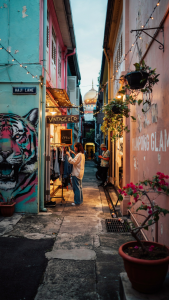
Location: Rochor, Central Region | Size: Historic Kampong, ~0.8 km² | Feel: Bohemian, Multicultural, Fragrant
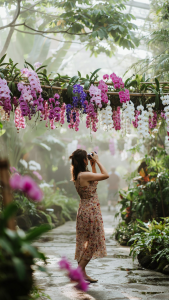
My personal notes…
“Afternoon tea at Corner House — a colonial-era bungalow surrounded by heliconias, pandan cakes, tea steeped with local herbs. When they brought the tray, a monkey hung from a branch above and stared. There was a moment where we both looked at each other as if to say “what are you doing here.” It didn’t decide I was worth leaving for and go; it stayed. So I stayed too. In the end, it got bored and left.”
9.Orchard Road
It’s fashionable to look down on Orchard Road. People call it “just a shopping street.” They’re wrong. Yes, there are glass towers and luxury brands stretching for 2.2 kilometers. But come here in December — the light installations are the kind that outdo Tokyo, outdo Vienna. And look at the Peranakan terrace houses of Emerald Hill, squeezed between the glass towers: magenta shophouse facades, pastel yellow, gold-embroidered shutters. Two faces of the city, a hundred meters apart.
Two nights at Shangri-La Singapore, in the Garden Wing — a balcony overlooking the rainforest, set within 15 acres of gardens. I saw the city from the viewing deck on the roof of ION Orchard. I browsed the design shops at Pedder on Scotts. I had a reservation at Zén — Singapore’s three-Michelin-starred Japanese-Swedish omakase experience. What can I say about that evening. Actually, let me say it: chef Tristin Farmer composed every plate so precisely that once you finished eating, you regretted not having more.
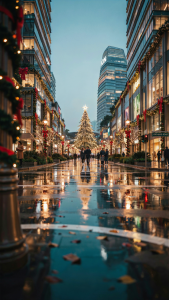
Location: Orchard Planning Area, Central Region | Size: 2.2 km boulevard | Feel: Grand, Upscale, Festive
My personal notes…
“Sunday brunch at Shangri-La’s The Rose Veranda: kaya toast, kueh lapis, Ceylon tea. I looked out at the garden — no wind, just birdsong. The noise of Orchard Road couldn’t reach this far. Sometimes the best kind of luxury is simply this much silence.”
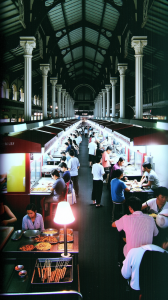
My personal notes…
“Tian Tian’s chicken rice: rice cooked in rich chicken broth, poached chicken so tender it trembles, three dipping sauces. Three dollars. What can you even say in front of a dish like that? You can only eat it.”
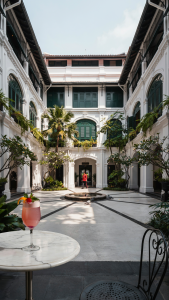
My personal notes…
“A pink Singapore Sling at the Long Bar, to the rustle of peanut shells underfoot. I thought about Ngiam Tong Boon, who invented this drink in 1915. How does a glass turn into a legend? The answer is still here, in the same recipe, in the same glass.”
12.East Coast Park and Katong
Cycling out to East Coast Parkway early in the morning, Singapore feels like a different city. Pedaling along the casuarina trees, the South China Sea is on your left, the islands of Indonesia across the water. Then you turn inland and enter Katong — mint green, faded rose, cream-colored Peranakan shophouses on Joo Chiat Road, facades covered in hand-painted tiles. To me, this is Singapore’s most gracious neighborhood.
Two nights at Village Hotel Katong — a lovely place, respectful of Peranakan heritage. A park tour at sunrise, followed by the Katong Antique House: the owner spoke as if he’d given a name to every single piece in the collection; he’d point to a tile and then launch into the story of the craftsman who made it. Lunch at 328 Katong Laksa. In the evening I did some painting at a Peranakan tile workshop. My hands got covered in clay. I didn’t mind at all.
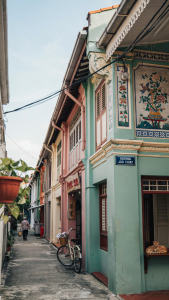
Location: Marine Parade / Joo Chiat, East Coast | Size: 185 hectares of park along 15 km | Feel: Relaxed, Colorful, Peranakan
My personal notes…
“Katong laksa: shrimp paste, coconut milk, lemongrass — deep and aromatic. The rice noodles are pre-cut, meant to be eaten with just a spoon. Served in a plastic bowl, it’s a dish that deserves a biography written about it — the same recipe since the 1950s, the same neighborhood, the same stubbornness.”
13.Haw Par Villa
There’s no proper way to describe Haw Par Villa. Let’s try anyway: a strange, mesmerizing, slightly eerie heritage park built in 1937 by Aw Boon Haw, the inventor of Tiger Balm, telling Chinese mythology and moral tales through colorful statues and dioramas. The Ten Courts of Hell: a walk-through depicting the torments of hell with life-sized figures. I took photos. Then I stopped and thought: how did Aw Boon Haw even come up with this idea?
The Haw Par Villa MRT station (CC25) drops you right at the door. Admission is free — and this is one of the most valuable free experiences in the world. Nearby, I stayed one night at One°15 Marina Sentosa Cove. I devoted the whole morning to the park. There was Chinese opera in the afternoon. Wherever the day turned bizarre, wherever it turned strange, it just stayed that way.
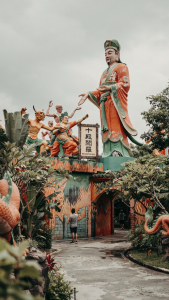
Location: Pasir Panjang, Southwest Singapore | Size: 8.5 hectares, est. 1937 | Feel: Surreal, Mythological, Eccentric
My personal notes…
“I bought a small ceramic tiger from the gift shop — orange-and-black striped, small, roaring. The clerk wrapped it herself because I was busy. No problem at all. That tiger now sits on my desk, and every time I look at it I remember Haw Par Villa’s strange, singular atmosphere. Travel memories sometimes live in small objects like this.”
14.National Gallery Singapore
Before entering the National Gallery Singapore, stop for a moment outside. The old Supreme Court and City Hall — two 1930s neoclassical colossi — have been transformed into a single museum, with a gossamer-light glass and steel canopy stretched between them. That transformation is itself a work of art; under that gossamer canopy, where colonial plaster shakes hands with modern steel, time folds in on itself. Inside, the world’s largest collection of Southeast Asian contemporary art awaits.
Two nights at The Fullerton Hotel — across the street, in the former General Post Office building, an 1928 neoclassical monument. Two heritage giants standing face to face. I took a guided tour at the DBS Singapore Gallery, walked through the UOB Southeast Asian collection. I had a lunch reservation at Odette. I also browsed the bookshop — a good museum’s bookshop is a museum in its own right.
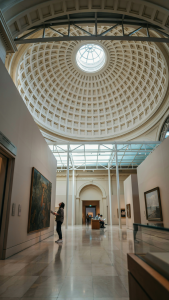
Location: St Andrew’s Road, Civic District | Size: 64,000 m² across two buildings | Feel: Intellectual, Elegant, Inspiring
My personal notes…
“Lunch at Odette: a delicate green Brittany pea velouté, poured tableside over micro herbs. A quail egg yolk right in the center. Facing that dish, I thought about how right a decision it was not to become a chef — a thought that both relieved me and humbled me.”
15.Pulau Ubin
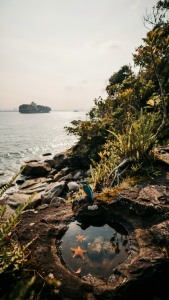
The bumboat ride took five minutes. When I stepped onto the other shore, there was almost no phone signal. The roads were dirt. A rooster ran past me. I was in Singapore, but I wasn’t in Singapore. The night before, I’d been at Capella Singapore — 30 acres of gardens, porcelain plates, white linens. This morning, I was chasing roosters around on Pulau Ubin. That contrast was a deliberate choice: sometimes, to truly savor luxury, you need to set it aside.
I boarded from Changi Point Ferry Terminal. I rented a bike on Ubin for S$8. I saw mudskippers and starfish at the Chek Jawa Wetlands. I climbed Butterfly Hill. At noon I drank fresh coconut at the jetty; the man was busy, so I just sat. No one waited on anyone.
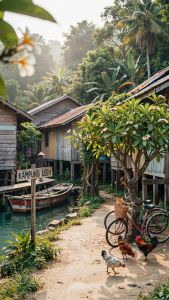
Location: Off the northeast coast, Changi | Size: 10.2 km², population of about 35 | Feel: Wild, Nostalgic, Unhurried
My personal notes…
“I ate nasi lemak at the island’s one open coffee shop — roosters milling around my feet, the smell of sea salt and wild ginger in the air. I never photographed that lunch. Sometimes not taking a photo is the most powerful way to live in the moment.”
20.Tiong Bahru
When you go to Tiong Bahru, you understand something: this is what “cool” looks like in Singapore. 1930s Streamline Moderne apartment blocks, rounded balconies, white facades. Below them, BooksActually, Forty Hands, French bakeries, record shops. Morning coffee at 7am, an old auntie’s stall already open in the market. The city’s modernist and traditional faces manage to exist at the same time — this neighborhood has a sense of balance found nowhere else.
Two nights at Scarlet Singapore — a chic boutique property in Tanjong Pagar. I walked to Tiong Bahru every morning. I spent over an hour at BooksActually — browse this bookshop, just look around, you don’t have to buy anything. I had a pour-over at Forty Hands. I got to the market at 7am. And I found ang ku kueh at an auntie’s stall.
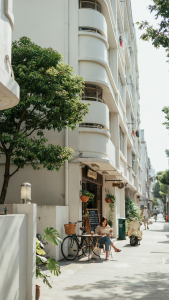
Location: Tiong Bahru, Central Region | Size: Pre-war housing estate, ~0.6 km² | Feel: Chic, Literary, Charming
My personal notes…
“Ang ku kueh: turtle-shaped, saffron red, filled with sweet green bean paste. I ate it on an Art Deco stairway step while reading the novel I’d bought from BooksActually. I’m the only one who remembers that morning. And that’s what makes it even more beautiful.”
21.Dempsey Hill
Prepare yourself as you arrive at Dempsey Hill: time slows down. The brick buildings of the old British barracks are now gourmet restaurants and antique galleries. Above them, 80-year-old rain trees. Their shade is so wide that the midday sun can’t reach through. The city’s noise stays behind those trees. Some places exist not to be visited, but to be stayed in — Dempsey Hill is exactly that kind of place.
I came by taxi from Goodwood Park Hotel — just a few minutes. I spent an hour at Shang Antique, looking at Southeast Asian religious art; I admitted to myself what I understood and what I didn’t, and that honest admission is the truest stance to take in front of art. I bought Peranakan household items at Lim’s Arts and Living. I had brunch at PS.Cafe Dempsey. On the way back I stopped in the garden and felt: this is the place where Singapore made me feel most at home.
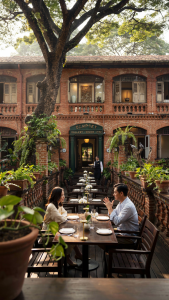
Location: Tanglin, Central Region | Size: Old barracks, ~12 hectares | Feel: Sophisticated, Leafy, Gourmet
My personal notes…
“Truffle shoestring fries at PS.Cafe Dempsey, under a 100-year-old tree. A Sunday afternoon. No noise from Orchard Road, no crowds. Just the sound of leaves. Sometimes the best kind of luxury is simply this much silence.”
22.Peranakan Museum
You don’t have to read a textbook to get to know Peranakan culture. Just step into this museum on Armenian Street. Look at the silk embroidery on the kebaya blouses. Stand in front of the reconstructed wedding chamber. See the impossible pinks and jade greens of Nyonya porcelain. This culture explains itself to you: it’s what two civilizations created by touching each other across centuries.
I walked 10 minutes from City Hall MRT, setting off from The Fullerton Hotel. I attended a talk on beadwork, watched a kasot manek demonstration, and spent at least twenty minutes in the wedding chamber in Gallery 6. I finished with a Nonya kueh tasting workshop — pandan, coconut, rosewater. Big stories on small plates.
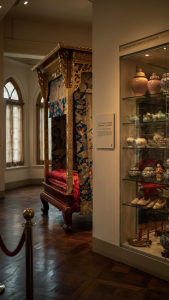
Location: Armenian Street, Civic District | Size: 10 gallery spaces across 2 floors | Feel: Delicate, Cultural, Illuminating
My personal notes…
“In Gallery 4, I saw nyonya sireh containers in a glass case. Silver gilt, phoenix and peony reliefs, made by an anonymous craftsman a century ago. Made for whom? Who would ever know? But here it was, under the light. This beauty was made to be seen by someone — and when I became that someone, I felt a small, quiet pride.”
23.Fort Canning Park
Fort Canning is Singapore’s most layered hill. 14th-century Malay royal tombs, Churchill’s WWII command bunker, the Gothic-arched gate of the old Christian cemetery, and the aromatic Spice Garden — all on the same 40 acres, side by side. At dawn, when the rain trees that have stood here since 1859 catch the light from behind and the colonial walls glow amber, this place speaks in an entirely different way.
Two nights at Hotel Fort Canning — a 1926 building, right inside the park. I got up before dawn every morning and climbed the hill. I visited the Battlebox museum — a bulletproof room, old maps, small objects of war; it’s chilling to think that Singapore’s 1942 decision to surrender was made in this very room. I watched open-air Shakespeare. I sketched the Gothic gate. Some places shouldn’t be photographed — they should be drawn.
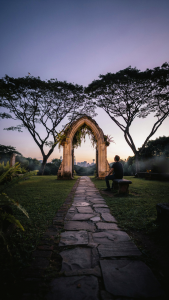
Location: River Valley, Central Region | Size: 40-acre hill above Clarke Quay | Feel: Historic, Peaceful, Atmospheric
My personal notes…
“I climbed to the summit before dawn broke. The Singapore skyline glowed among the trees, still lit up below. There was no one else there. A hornbill called out — once. Then silence. Within that silence, that city felt like it belonged to me.”
24.Gillman Barracks
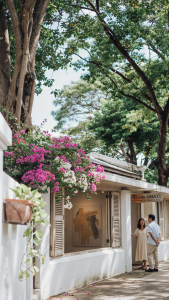
Most people don’t know about Gillman Barracks. British colonial barracks built in 1936, now contemporary art galleries. Whitewashed buildings, wide verandas wrapped in bougainvillea, an art district strip shaded by eighty-year-old angsana trees. The people standing here looked at the paintings and whispered. So did I.
I came by taxi from Labrador Park MRT. While staying at One°15 Marina Sentosa Cove, I set aside an afternoon. I saw Australian Indigenous art at Sullivan+Strumpf. A South Asian collection at Sundaram Tagore. Lunch at Naked Finn. Then I sat in the garden and sketched the bungalows. I’d come back to Singapore for afternoons like this.
Location: Labrador, Southwest Singapore | Size: 6.4 hectares, 14 gallery spaces | Feel: Artistic, Colonial-era, Intimate
My personal notes…
“Wild coral trout at Naked Finn: just calamansi lime and nam jim. Charcoal fire crackling beside me. This simplicity is the product of decades of trust — when a chef decides what to leave out, all that remains is the essence itself.”
25.MacRitchie Reservoir Park
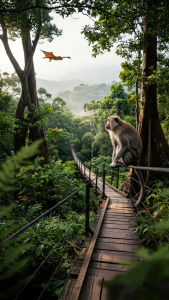
The moment you step into MacRitchie, the city lets go of you. This reservoir, here since 1868, embraces the true Central Catchment rainforest, ringed by 12 kilometers of nature trails. The TreeTop Walk suspension bridge sways 25 meters above the forest floor. Long-tailed macaques sit on the bridge railings. If you’re lucky, you might spot Cynocephalus variegatus — the flying lemur — gliding between the trees. Everything was slow. You struggle to convince yourself this is Singapore.
I came by taxi from Caldecott MRT, staying at the Capitol Kempinski. I started the 11 km loop early in the morning. I crossed the TreeTop Walk, spotted a flying lemur, locked eyes with long-tailed macaques. In the afternoon I kayaked on the reservoir — turtles were sunning themselves. Everything was slow. This was our truest Singapore day.
Location: Central Catchment Nature Reserve | Size: 12 km trail, 64-hectare reservoir | Feel: Wild, Reflective, Restorative
My personal notes…
“I sat on a mossy log at the end of the TreeTop Walk. I pulled out a banana-leaf-wrapped nasi padang from my bag — beef rendang, fragrant rice. The forest clicked, hummed. I’ll never find this lunch or this silence again. But in Singapore, there’s always one more first day.”